
The Golden Rule of Desert Plants
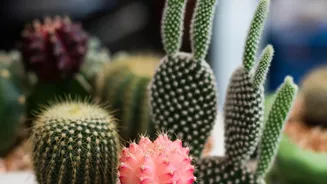
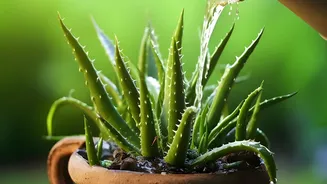
Cacti and succulents evolved to thrive in arid environments with infrequent, heavy rainfall. To survive, they developed the ability to store water in their leaves, stems, and roots. This makes them incredibly drought-tolerant but also highly susceptible
to root rot if their soil stays wet for too long. Unlike tropical plants that prefer consistently moist conditions, desert plants need their soil to dry out completely between waterings. This cycle of a thorough soak followed by a dry period mimics their natural habitat and is the single most important principle for keeping them healthy. Watering on a fixed schedule—like every Sunday—is a common mistake because it ignores how quickly the soil is actually drying, which can change with the seasons, pot size, and indoor temperature.
Your Best Tool is Your Finger
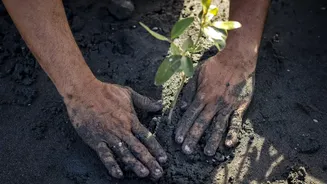
Forget expensive moisture meters, which can give misleading readings in the gritty, low-conductivity soil that succulents prefer. The 'finger test' is the gold standard for a reason: it’s free, immediate, and accurate. To do it, simply push your index finger into the soil near the base of the plant, away from the stem, to a depth of about two inches, or up to your second knuckle. If the soil feels cool and moist, or if any soil sticks to your finger when you pull it out, do not water. The plant still has access to moisture. If your finger comes out clean and the soil at that depth feels completely dry and crumbly, it's time to give your plant a drink.
Why This Simple Trick Works
The surface of the soil is a poor indicator of a plant's needs. It often dries out within a day or two, especially indoors, which can trick you into thinking the plant is thirsty when the root zone is still saturated. Watering based on a dry surface is how most desert plants end up being overwatered. By checking two inches down, you are assessing the moisture level where the bulk of the feeder roots are actually located. This simple action ensures you are responding to the plant’s real conditions rather than a surface-level illusion. For very deep pots, a plain wooden skewer or chopstick can be used as an extension of your finger; push it deep into the soil, leave it for a few minutes, and if it comes out clean and dry, it is time to water.
The 'Soak and Dry' Method
When the finger test confirms the soil is dry, water thoroughly. This is known as the 'soak and dry' method. Water the soil at the base of the plant, not the leaves, until it runs freely from the drainage hole at the bottom of the pot. This deep watering encourages a strong, healthy root system. After watering, make sure to empty any saucer or decorative cachepot so the plant is never left sitting in standing water, which is a fast track to root rot. Then, simply wait. Do not water again until the finger test shows that the soil is once again completely dry two inches deep. This could be a week in the summer or a month in the winter, which is why testing is so much better than scheduling.
Signs of Thirst vs. Drowning
While the finger test is your primary guide, your plant will also give you visual cues. An underwatered succulent's leaves may look wrinkled, shriveled, or feel less firm and plump than usual. An overwatered succulent, however, will have leaves that are soft, mushy, and may appear translucent or yellow. The leaves of an overwatered plant often drop easily with the slightest touch. Critically, wilting in wet soil is a sign of root rot, not thirst—adding more water will only make it worse. If you're ever in doubt, it is always safer to wait another day or two before watering. A desert plant can easily recover from being a little too dry, but it's very difficult to save one from rot.