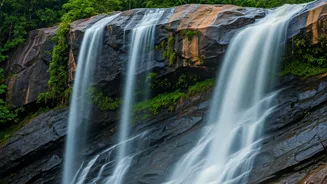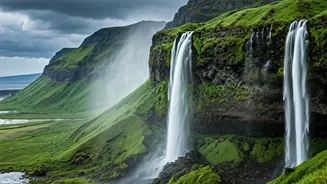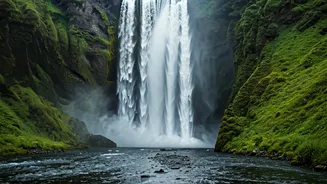







What is a Reverse Waterfall?
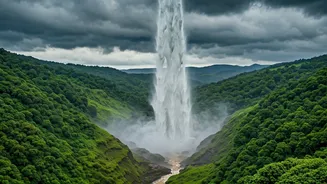
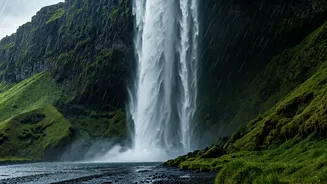
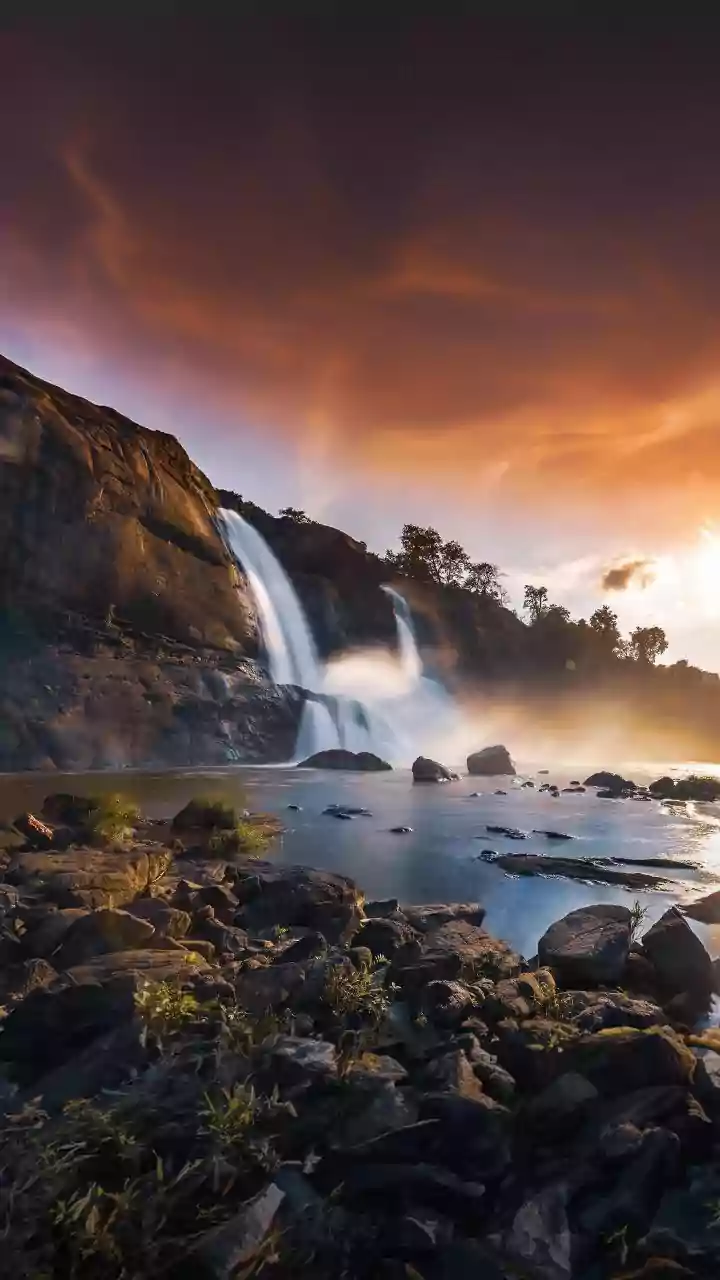
A reverse waterfall isn’t a place where gravity has taken a holiday. Rather, it’s a breathtaking spectacle where water from a cascade is blown upwards by incredibly strong winds. Instead of plunging into the valley below, the water is atomised into a fine
mist and pushed back up the cliff face, creating the illusion that the waterfall is flowing in reverse. This phenomenon is entirely dependent on two key factors: the right kind of topography and specific weather conditions. It’s a temporary and dramatic display that only occurs when nature’s forces align perfectly, turning a familiar landscape into something surreal and otherworldly.
The Simple Science of Defying Gravity
So, how does water manage this impressive feat? The secret lies in wind dynamics. The effect is most common in coastal mountain ranges or high plateaus that face strong, uninterrupted winds, like those of the Indian monsoon. As these powerful gusts of wind travel across a flat plateau and hit the edge of a cliff, they have nowhere to go but up. This creates a powerful updraft. When a waterfall flows over that same cliff edge, its water is caught by this vertical wall of wind. The force of the updraft is so immense that it overcomes the gravitational pull on the water droplets, especially the lighter spray, lifting them up and back over the precipice. It’s a classic case of aerodynamics overpowering gravity, albeit for a short, beautiful moment.
Why the Monsoon is the Perfect Catalyst
In India, reverse waterfalls are almost exclusively a monsoon phenomenon, particularly in the Western Ghats. During the monsoon season, from June to September, south-westerly winds sweep in from the Arabian Sea, carrying immense moisture and travelling at high speeds. When this moisture-laden wind system slams into the formidable barrier of the Ghats, it is forced to rise rapidly. This orographic lift not only causes the heavy rainfall that feeds the region’s countless waterfalls but also generates the consistently fierce winds needed to push that water back up. The combination of saturated air, high-velocity winds, and steep cliffs makes the Western Ghats a global hotspot for witnessing this natural trickery.
Where to Witness the Magic
Maharashtra is the undisputed capital of reverse waterfalls in India. One of the most famous locations is at Naneghat, a mountain pass in the Western Ghats near Junnar. Trekkers and tourists flock here during peak monsoon to feel the powerful winds and watch the waterfalls seemingly climb the cliffs. Another prime spot is Malshej Ghat, known for its dense fog and numerous waterfalls that line the winding roads; many of them exhibit this reverse flow during intense windy spells. Near Lonavala, Visapur Fort offers another vantage point, where the winds are so strong they can make it difficult to stand, while the waterfalls next to the trail put on their gravity-defying show. These are not just sights to be seen from a distance; they are full sensory experiences.
More Than Just a Photo Op
Visiting a reverse waterfall is an adventure that engages all the senses. The primary sensation is the sheer force of the wind, which can be strong enough to make you lean into it to keep your balance. Then there's the spray. Unlike the downward mist of a regular waterfall, here you are drenched by a cool, upward blast of water that feels like rain ascending from the earth. The sound is a mix of a waterfall’s roar and the howl of a gale-force wind. For photographers and nature lovers, it’s a chance to capture a rare and dynamic event, a moment where the familiar rules of nature are beautifully, and temporarily, suspended.