





Beyond the Six-Pack: What is Your Core?
When people hear 'core,' they often picture the rectus abdominis, the 'six-pack' muscles at the front of the stomach. But your true core is a complex network of muscles that forms a powerful corset around your entire trunk. It includes deep abdominal
muscles like the transverse abdominis, muscles along your back like the erector spinae, the obliques on your sides, and even your diaphragm and pelvic floor muscles. Think of it as a muscular box that connects your upper and lower body. Its primary job isn't to look good on the beach, but to stabilize your spine and pelvis, creating a sturdy foundation for all movement. A strong core is the central link in the chain that powers everything you do.
The Core's Role as Your Body's Anchor
A stable core acts as the body's anchor, providing a solid base from which your arms and legs can move powerfully and efficiently. Imagine trying to fire a cannon from a canoe; without a stable base, much of the power is lost. Similarly, if your core is weak, your body has to work much harder to generate force, leading to inefficient movement and fatigue. Strong core muscles work in harmony to keep your trunk steady during any activity, whether you're lifting a heavy box or simply standing still. This stability allows for the smooth transfer of force between your upper and lower body, which is crucial for almost every physical activity imaginable, from swinging a golf club to carrying groceries.
Spotting the Gains: From Clumsy to Controlled
So, how do these gains in core strength actually show up? The changes are often subtle at first, appearing as newfound ease and control in everyday tasks. You might notice that you can carry a heavy laundry basket without swaying, or that you can stand on one leg to tie your shoe without wobbling. Activities that used to feel awkward, like reaching for something on a high shelf or twisting to look behind you, suddenly feel more fluid and secure. This is because your body is no longer wasting energy trying to stabilize itself; your core is doing that job automatically. For those who are active in sports, the benefits are even more pronounced—runners may find they have more endurance, while tennis players might notice more power in their serve, all originating from that stable central link.
More Than Movement: Injury Prevention and Posture
One of the most significant benefits of a strong core is its role in injury prevention. A stable core protects your spine by absorbing shock and distributing force more evenly throughout your body. Many instances of lower back pain are linked to weak core muscles that fail to provide adequate support for the spine. By strengthening these muscles, you create a natural brace that reduces strain on your spinal discs and ligaments, significantly lowering your risk of back injuries. Furthermore, a strong core is fundamental to good posture. It helps you sit and stand tall, which can prevent the neck and shoulder pain that often comes from slouching over a desk.
Simple Paths to a Stronger Center
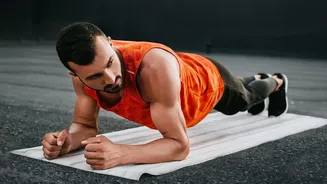
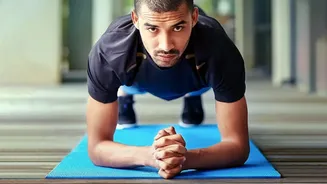
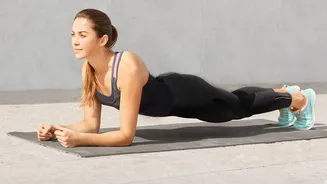
Building a stronger core doesn't require a gym membership or complicated equipment. Many of the most effective core exercises are simple, classic movements that focus on stability and control. Exercises like planks, bridges, and bird-dogs are excellent because they challenge your core muscles to work together to keep your trunk stable. Unlike crunches, which primarily work the superficial abs, these exercises engage the deep, stabilizing muscles that are key to better balance and control. The goal isn't to perform movements quickly, but to hold a steady, controlled position, focusing on engaging the right muscles. Even activities like yoga and Pilates are fantastic for building functional core strength that translates directly into better movement in your daily life.