







A Nation on Standby
On the third Thursday of November, an unusual quiet descends upon South Korea. For 35 minutes in the afternoon, all airport takeoffs and landings are suspended. Planes already in the sky must maintain an altitude of at least 3 kilometres. On the ground,
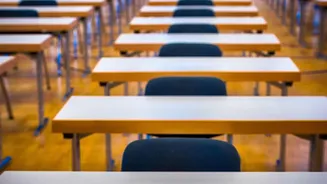
construction work halts, military training exercises pause, and the stock market opens an hour late to ease traffic. Public offices and many private companies ask employees to start their day at 10 a.m. Police cars are on standby, not for a crisis, but to give students running late a high-speed escort to their exam centres. This nationwide coordination is all in service of one event: the College Scholastic Ability Test (CSAT), known colloquially as 'Suneung'.
What is the Suneung?
The Suneung is an eight-hour marathon exam that more than half a million students take annually. It consists of six sections, including Korean language, mathematics, English, Korean history, and other elective subjects. Held on a single day from 8:40 a.m. to 5:45 p.m., the test is the culmination of more than a decade of intense study. The no-fly zone is specifically timed to coincide with the English listening comprehension section, ensuring that the faint roar of a jet engine doesn't cause a student to miss a crucial question and jeopardise their score.
The Stakes Are Everything
In South Korea's hyper-competitive society, the Suneung is far more than just a university entrance exam; it's seen as a life-altering event. A high score is the key to securing a place at one of the country's top universities, particularly the prestigious 'SKY' institutions: Seoul National University, Korea University, and Yonsei University. Admission to one of these universities is widely believed to set a person on a path to a successful career, financial stability, and even better marriage prospects. The pressure is so immense that it's not uncommon for students who are unhappy with their scores to spend another year studying to retake the exam. In 2026, a record number of retakers, making up over 35% of all applicants, signed up for a second chance.
A System Under Pressure
This single-minded focus on one day of testing has profound societal consequences. Families invest enormous sums in private tutoring and hagwons (cram schools) to give their children an edge. The mental health toll on students is significant, with the exam period marked by intense anxiety. In recent years, the exam's integrity has also come under threat. The 2026 Suneung was conducted with unprecedented security measures to combat cheating fears involving AI and hidden cameras. Authorities deployed thousands of extra supervisors and even used the national emergency alert system to detect hidden smartphones, a move that caught several students and startled an unsuspecting public. These measures highlight the lengths the government will go to preserve the perceived fairness of a test that holds such sway over the nation's youth.