



The Hidden Dangers of 'Too Much Love'
Watering is essential, but timing is everything. When soil remains saturated, the air pockets that roots need to breathe are filled with water. This lack of oxygen can lead to a condition called root rot, where roots literally begin to decay. This decay can spread
to healthy roots, even if the soggy conditions are corrected. Overwatering doesn't just drown the roots; it also flushes away essential nutrients from the soil and can create a perfect breeding ground for fungus and pests. In effect, what feels like attentive care can quickly become a direct threat to your plant's survival, causing stress and making it susceptible to disease.
Reading the Signs of Overwatering
Plants have ways of telling us when they are unhappy. Paradoxically, a plant suffering from too much water can look a lot like one that's thirsty. Leaves may turn yellow, wilt, and droop because the rotting roots can no longer absorb moisture and nutrients effectively. Unlike an underwatered plant whose leaves are dry and crispy, an overwatered plant's leaves will often feel soft and limp. Other telltale signs include stunted growth, leaf loss of both old and new leaves, and water-soaked blisters or spots on the leaves, a condition known as edema. You might also notice mold on the surface of the soil or a foul, rotten smell coming from the base of the plant.
The Right Way to Check for Thirst
So, how do you know when it's truly time to water? Ditch the fixed schedule and learn to read your plant's needs. The most reliable and low-tech method is the finger test. Simply push your finger about one to two inches into the soil. If it feels dry at that depth, it's time to water. If you feel moisture, it’s best to wait and check again in a day or two. For those who prefer to keep their hands clean, a simple wooden stick like a chopstick works just as well; if it comes out clean and dry, the soil is dry. Another method is to judge the weight of the pot. A pot with dry soil will feel significantly lighter than one that has just been watered. For a more scientific approach, a soil moisture meter can take the guesswork out of the equation entirely.
Mastering the Art of Watering
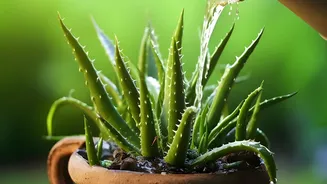
Once you've determined your plant is thirsty, water it thoroughly, not tentatively. The goal is to moisten the entire root system. Water slowly and evenly until you see excess draining from the holes at the bottom of the pot. This deep watering encourages roots to grow downward and stronger. After watering, make sure to empty any saucer or tray beneath the pot within an hour; letting a plant sit in standing water is a direct invitation for root rot. While top-watering is most common, bottom-watering can also be effective, especially for very dry soil. Simply place the pot in a sink or tray with a few inches of water and let it absorb moisture for about 30 minutes. Remember that different plants have different needs; a tropical plant will be thirstier than a succulent, which prefers its soil to dry out completely.