








Deconstructing the Headline Number
Recent data from the Periodic Labour Force Survey (PLFS) for the April-June 2026 quarter places India's overall unemployment rate for people aged 15 and above at 5.4%. This figure, released by the National Statistical Office, represents a slight increase
and captures a broad snapshot of the country's job market. However, this single percentage point conceals critical details. The national rate is an amalgamation of different realities playing out in rural and urban areas, and across various age groups and genders. While the rural unemployment rate was 4.8%, the urban rate was significantly higher at 6.7%. More alarmingly, the picture for young people is far starker. The unemployment rate for youth aged 15-29 jumped to 15.9% in the same quarter, a figure that demands a closer look beyond the top-line number.
The Epicentre: Urban Youth in a Jobs Deficit
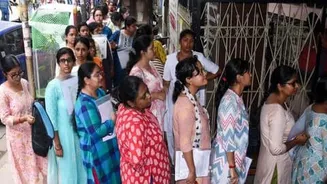
For millions of young Indians migrating to cities with degrees and aspirations, the urban job market is proving to be a formidable challenge. The urban youth unemployment rate stood at a staggering 18.2% in the April-June 2026 quarter. This highlights a persistent structural issue: cities, while being centres of economic activity, are failing to generate enough quality jobs to absorb the influx of new entrants into the workforce. This problem is particularly acute for educated youth, where the unemployment rate has been shown to increase with the level of education. The paradox is that as more young people gain qualifications, they find themselves competing for a limited pool of formal sector jobs, leading to widespread underemployment or precarious work in the gig economy. The situation is even more dire for young urban women, whose unemployment rate has climbed to concerning levels.
A Tale of Many States: An Uneven Crisis
The impact of unemployment is not felt uniformly across the country. The national average smooths over significant regional disparities, with some states facing a much deeper crisis than others. For instance, in the April-June 2026 quarter, Chhattisgarh recorded the highest unemployment rate among states and union territories at a troubling 12.8%. It was followed by Jammu & Kashmir (9.1%), Kerala (8.9%), and Punjab (8.5%). In contrast, states with strong industrial bases like Gujarat have historically maintained lower unemployment rates. These variations are often linked to factors like the pace of industrial growth, the effectiveness of state-level employment policies, the structure of the local economy, and the mismatch between the skills of the local workforce and the demands of available jobs.
Skills Gap and the Education Paradox
A key driver of high youth unemployment, especially among the educated, is the well-documented 'skills gap'. Many graduates emerge from the education system with theoretical knowledge but lack the practical, industry-ready skills that employers in high-growth sectors demand. This mismatch means that even as companies struggle to fill technical roles, a large number of qualified candidates remain jobless. This phenomenon, often called 'educated unemployment', leads to frustration and a sense of disenfranchisement among young people who have invested significant time and resources in their education. Addressing this requires systemic reforms that better align educational curricula with market needs, alongside a greater emphasis on vocational training and apprenticeships to bridge the gap between classroom and workplace.
The Ripple Effect on the Economy and Society
The high rate of urban youth unemployment is more than just an economic statistic; it has profound social consequences. Widespread joblessness among the young curtails consumer spending, which in turn slows down overall economic growth. On a personal level, it leads to delayed financial independence, increased mental health strain, and growing frustration. When a significant portion of the country's demographic dividend—its large young population—is unable to find productive work, it erodes social cohesion and can lead to unrest. Ensuring that India's youth are not just educated but also gainfully employed is therefore not only crucial for economic prosperity but also for long-term social stability.