





Start with Official Weather Alerts
Before you even pack your bags, your first step should be to check official weather advisories. The India Meteorological Department (IMD) is the primary source for this information. The IMD uses a colour-coded system to indicate the severity of expected
weather. A 'Green' alert means no advisory is needed, while 'Yellow' suggests you should be aware of potential bad weather. An 'Orange' alert means you should be prepared for disruptions, as heavy rainfall is expected. A 'Red' alert is a signal to take action, indicating a forecast of extremely heavy rain that poses a significant threat to life and property. If your destination or route is under a red or orange alert, it is strongly advised to postpone non-essential travel. You can find these updates on the IMD's 'Mausam' website and app.
Assess Your Destination and Route
Not all destinations are equal during heavy rains. A trip to a city with good drainage is very different from a journey to a hill station. Hilly and mountainous regions, such as those in Uttarakhand, Himachal Pradesh, and the Western Ghats, are particularly prone to landslides and flash floods during the monsoon. Recent events have shown that even popular routes can be blocked by debris, stranding travellers for hours or even days. Before you leave, research your specific route. Check local news and traffic police updates for any road closures. Avoid routes known for waterlogging, landslides, or crossing small, low-lying bridges over rivers that can swell rapidly. Choosing a destination closer to home can also reduce travel time and associated risks.
Your Mode of Transport Matters
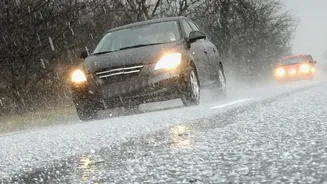
How you plan to travel significantly impacts your risk level. For road trips, ensure your vehicle is in top condition, especially the tyres, brakes, and wipers. Wet roads can be slippery, dramatically increasing braking distances. It is crucial to drive slowly, maintain a safe distance from other vehicles, and avoid driving through waterlogged roads, as the depth can be deceptive and damage your car's engine. For train journeys, while often scenic during monsoons, be prepared for potential delays or cancellations due to flooded tracks. Air travel is also susceptible to delays, especially with afternoon and evening flights when thunderstorms are more common. Booking an early morning flight can often help you avoid cascading delays. Regardless of your mode of transport, building buffer time into your itinerary is essential.
Pack a Monsoon Emergency Kit
Smart packing can make a huge difference if you encounter delays or challenging conditions. Your standard travel kit should be supplemented with monsoon-specific essentials. A waterproof backpack or a rain cover for your luggage is non-negotiable to protect your belongings. Pack quick-drying synthetic clothing instead of cotton, and include an extra pair of clothes. Sturdy, waterproof footwear with a good grip is vital; avoid flip-flops on slippery surfaces. Your emergency kit should also contain a power bank for your phone, a basic first-aid kit with medicines for common ailments, mosquito repellent, and some non-perishable snacks and drinking water. Keeping your important documents, cash, and electronics in waterproof zip-lock pouches is another simple but effective precaution.
The Go/No-Go Checklist
Still unsure? Run through this final checklist. If you answer 'yes' to one or more of the high-risk questions, cancelling or postponing your trip is the safest choice.
1. Is there a Red or Orange alert issued by the IMD for my destination or route?
2. Is my destination a hill station or a region known for landslides?
3. Is my travel non-essential and purely for leisure?
4. Are news reports showing road closures or severe waterlogging along my planned route?
5. Do I have a tight schedule without any buffer days for potential delays?
6. Is my vehicle not fully serviced for rainy conditions?
Answering these questions honestly will help you prioritise safety over the desire for a weekend escape.