



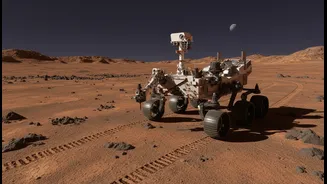


The Rover That Thinks for Itself
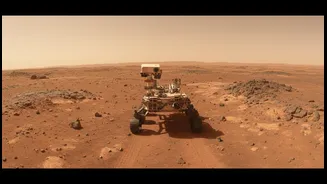
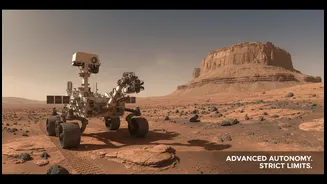
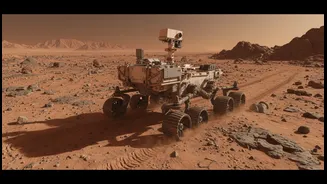
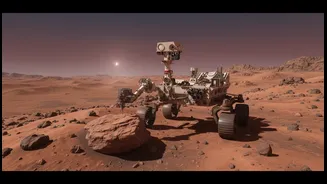
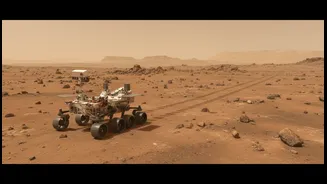
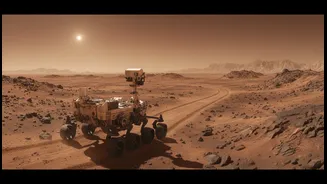
Perseverance is not just following a pre-programmed path. A significant upgrade from its predecessors, the rover possesses a powerful auto-navigation system called AutoNav. This allows Perseverance to 'think while driving,' a capability that has revolutionised
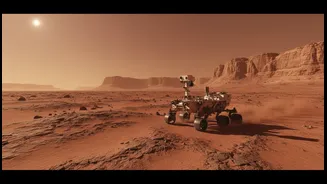
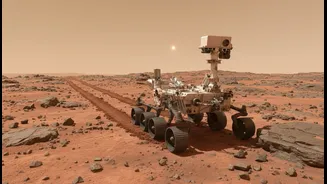
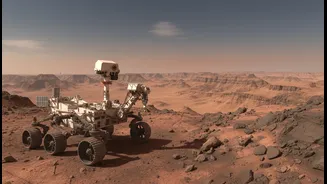
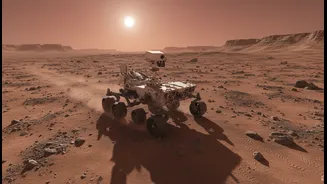
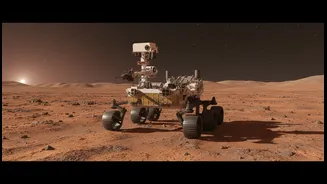
its exploration of Mars. Using its cameras, the rover creates 3D maps of the terrain ahead, identifies potential hazards like sharp rocks or steep slopes, and plots the safest and most efficient course without direct input from its human drivers back at the Jet Propulsion Laboratory (JPL). While older rovers like Curiosity had to stop, take images, and then plan their next move, Perseverance can analyse the terrain and make decisions while its wheels are still turning. This has allowed it to shatter all previous Martian driving records, covering more ground in a single day than previous rovers could, and recently completing a marathon distance of over 42 kilometres.
Powering a Martian Marathon
To endure a multi-year mission in the harsh Martian environment, Perseverance needs a reliable, long-term power source. Unlike the solar-powered Spirit and Opportunity rovers, whose missions were ultimately ended by dust storms covering their panels, Perseverance runs on a nuclear battery. This system, known as a Multi-Mission Radioisotope Thermoelectric Generator (MMRTG), converts heat from the natural decay of plutonium-238 into a steady supply of electricity. The MMRTG provides about 110 watts of power, which charges two lithium-ion batteries used for high-demand activities. This gives engineers incredible flexibility, allowing the rover to operate at night, during intense dust storms, and through the frigid Martian winters. The excess heat from the generator is also cleverly used to keep the rover's sensitive electronics and instruments warm, ensuring its survival and operation through extreme temperature swings.
The Self-Sufficient Explorer
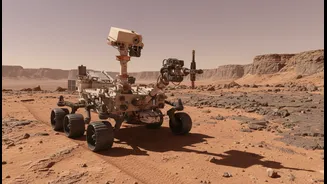
While Perseverance can't perform complex mechanical repairs on itself, the concept of 'maintenance' for a Mars rover is about resilience and remote problem-solving. It was designed with robust systems, including thicker and more durable aluminium wheels than its predecessor Curiosity, to better withstand the rugged terrain. Furthermore, its software is its ultimate repair kit. Engineers can transmit complex software updates across millions of kilometres to fix glitches, improve performance, and even add new capabilities. For instance, a recent update enabled a system called Mars Global Localization, allowing the rover to pinpoint its own location with incredible accuracy by comparing its camera images to orbital maps, reducing its reliance on Earth-based guidance. The rover also has a twin on Earth, named OPTIMISM, which engineers use to test solutions and operational procedures before sending commands to Mars, providing a crucial way to troubleshoot problems from afar.
Paving the Way for Future Explorers
The technological leaps demonstrated by Perseverance are not just for this mission alone; they are a critical testbed for the future of robotic and human exploration. The rover’s advanced autonomy is a necessary precursor for missions that will venture even farther and require more independent decision-making. Its MOXIE experiment, which successfully generated breathable oxygen from the thin Martian atmosphere for the first time, is a groundbreaking step towards supporting human life on another planet. Every sample of rock and soil cached by Perseverance for a potential future return to Earth provides invaluable data for understanding the planet's geology and past habitability. These capabilities, from self-driving to generating its own power and paving the way for oxygen production, are creating a blueprint for how humanity will one day live and work on Mars.