







The Core Objective: A Game of Precision
At its heart, lawn bowls is a game of incredible precision and strategy. The main goal is straightforward: roll your bowls (the game's balls) so they stop as close as possible to a much smaller white or yellow ball called the 'jack'. It sounds simple,
but there's a fascinating twist. Think of it as a strategic game of marbles, but on a much larger scale and with a unique set of challenges. Teams compete over a series of rounds, called 'ends'. In each end, players from both sides take turns to roll their bowls. Once all the bowls have been played, the team with the bowl or bowls closest to the jack scores points.
The Secret of the Bowl
The most crucial thing to understand about lawn bowls is that the bowls are not perfectly spherical. They are asymmetrically weighted, giving them a 'bias'. This means a bowl doesn't roll in a straight line; it follows a curved path. The smaller ring on one side of the bowl indicates the direction of the bias, and therefore which way it will curve. This is the secret to the game's complexity and beauty. Players don't aim directly at the jack. Instead, they must judge the 'green' (the line of the curve) and the 'weight' (the speed of the roll) to get their bowl to curl perfectly towards the target. Mastering this curve is the key skill that separates novices from champions.
How a Match Unfolds
A match is played on a section of the bowling green called a 'rink'. An 'end' begins with a player placing a mat at one end of the rink and then rolling the jack to the other end. The jack must travel at least 23 metres to be in play. Once the jack comes to a stop, it becomes the target. Players then take turns delivering their bowls from the mat, trying to build the 'head' — the cluster of bowls around the jack. A bowl that touches the jack during its journey is marked with chalk as a 'toucher'. A toucher remains 'live' even if it rolls into the ditch (the trench at the end of the rink). After all players have delivered their bowls, the end is complete and scoring begins.
Scoring and Winning the Game
Scoring is determined at the conclusion of each end. The team whose bowl is closest to the jack wins the end. They receive one point (or 'shot') for every one of their bowls that is closer to the jack than the nearest bowl of their opponent. For example, if Team A has three bowls closer to the jack than Team B's closest bowl, Team A scores three points for that end. The opposing team scores nothing. These points are tallied, and a new end begins from the opposite direction. A game is played for a pre-determined number of ends, and the team with the higher total score at the conclusion of all ends is declared the winner.
Why the Indian Team Is Excelling
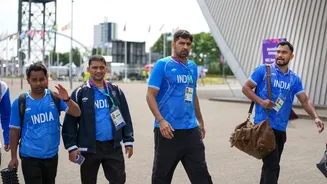
The recent success of the Indian team at the Commonwealth Games highlights their mastery of these skills. For instance, Putul Sonowal, making his CWG debut, stunned the reigning world champion Ryan Bester of Canada. This kind of upset requires immense control and nerve. The women's pairs team of Rupa Rani Tirkey and Pinki Singh—part of the historic gold-medal Fours team from 2022—have also registered back-to-back wins, including a dominant performance against South Africa. Their success isn't luck; it's a demonstration of superior strategy, precise weight control, and the ability to consistently read the green and use the bowl's bias to their advantage. They are expertly placing their bowls, defending against opponents, and executing under pressure, which is exactly what lawn bowls is all about.