






The Royal Biryani: A Feast in a Pot
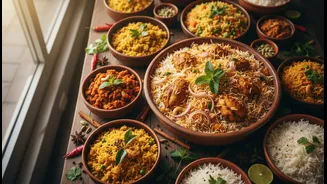
No discussion of shared meals is complete without mentioning biryani. With origins often traced to Mughal or Persian kitchens, this dish is the undisputed king of celebrations. Biryani involves a complex, slow-cooking process called 'dum', where marinated
meat or vegetables are layered with partially cooked, fragrant basmati rice and sealed in a heavy-bottomed pot. As it cooks, steam and aroma are trapped inside, melding the spices and flavours into a rich, cohesive masterpiece. The final reveal, when the lid is lifted, releases a cloud of aromatic steam that signals a feast is about to begin. Served at weddings, festivals, and large family gatherings, biryani is inherently communal, designed to be scooped from a large vessel onto the plates of eager guests.
Pulao: The Simpler, Soulful Cousin
Often mistaken for biryani, pulao (or pilaf) is a more rustic, one-pot wonder. Unlike the layered complexity of biryani, in a pulao, rice, vegetables or meat, and a blend of aromatic whole spices are cooked together, allowing the grains to absorb all the flavourful broth. While biryani is often reserved for grand occasions, pulao is the heart of many family meals and casual get-togethers. Dishes like a simple vegetable pulao, a nutty Kashmiri pulao adorned with fruits, or a hearty Awadhi Tehri showcase the versatility and warmth of this dish, which is always made in a quantity that assumes more than one person will be enjoying it.
Bisi Bele Bath: The Pride of Karnataka
From Karnataka comes Bisi Bele Bath, which translates to 'hot lentil rice'. This dish is a flavorful, porridge-like amalgamation of rice, lentils (toor dal), assorted vegetables, and a special, tangy spice powder. It is a complete meal in itself, often prepared in a large pot and served piping hot with a dollop of ghee and a side of crispy boondi or potato chips. With origins said to be in the Mysore Palace, Bisi Bele Bath is a staple at family lunches and is also commonly found in restaurants serving Udupi cuisine, where it is enjoyed by all.
Pongal: A Harvest Festival Offering
In South India, particularly in Tamil Nadu, Pongal is both a harvest festival and a dish made to celebrate it. There are two main versions: the savoury Venn Pongal, made with rice and moong dal and seasoned with black pepper, cumin, and curry leaves, and the sweet Sakkarai Pongal, which includes jaggery and nuts. During the festival, the dish is cooked in a pot until it boils over, an act that symbolizes abundance and prosperity. This overflowing pot is then offered to the deities before being shared among family and the community, reinforcing its role as a sacred, shared meal.
Pulihora: The Tangy Temple Staple
Pulihora, or tamarind rice, is another South Indian classic that is synonymous with festivals and community gatherings. It’s a dish where cooked rice is flavoured with a tangy and spicy paste made from tamarind, jaggery, chillies, and a host of nutty, crunchy elements like peanuts and lentils. Its tart flavour base also acts as a natural preservative, making it an ideal dish for travel and for feeding large crowds at temples, where it is a common form of 'prasadam' (a religious offering of food). Distributed in small leaf bowls, Pulihora connects devotees through shared flavour and faith.