



The Basic Idea: A Pacific Ocean Story
At its heart, the El Niño-Southern Oscillation (ENSO) is a recurring climate pattern involving the tropical Pacific Ocean. Think of it as a giant oceanic see-saw. In a normal year, strong trade winds blow from east to west across the Pacific, pushing
warm surface water towards Asia, including Indonesia and Australia. This allows cooler water to rise up near South America. This pattern is stable and helps drive predictable weather worldwide. El Niño, which means 'The Little Boy' in Spanish, turns this entire system on its head. It occurs irregularly every two to seven years and is marked by the weakening of these trade winds. As a result, the massive pool of warm water in the western Pacific sloshes back towards the central and eastern Pacific, leading to a significant warming of the ocean surface in that region. This change in ocean temperature might seem distant, but it sets off a chain reaction in the atmosphere that affects weather globally.
The India Connection: A Weaker Monsoon
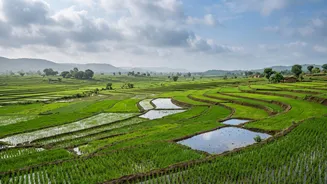
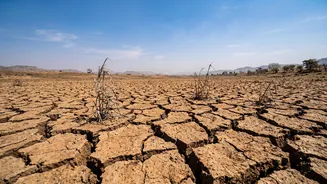
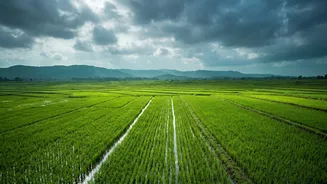
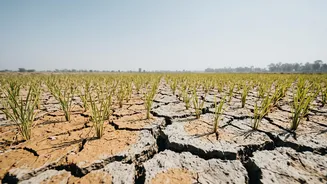
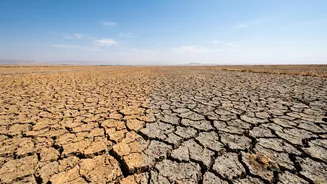
The most critical impact of El Niño for India is its relationship with the Southwest Monsoon. The Indian monsoon is a complex system driven by pressure differences between the cooling Indian Ocean and the heating landmass of the subcontinent. El Niño disrupts this delicate balance. The shift in warm water and atmospheric pressure patterns in the Pacific weakens the circulation that typically brings moisture-laden winds to India. The result is often a suppressed or delayed monsoon with reduced rainfall. Historically, about 60% of El Niño years have seen below-normal rainfall in India, and every severe drought in the country's recent history has been linked to an El Niño event. While not every El Niño guarantees a drought, it significantly raises the probability, making it a major concern for a country where agriculture is heavily dependent on monsoon rains.
More Than Just Rain: The Ripple Effect
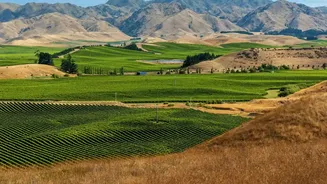
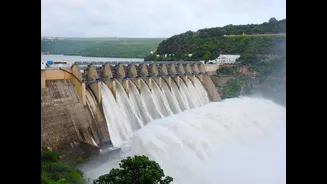
The consequences of a weak monsoon stretch far beyond the farm. For young Indians, the most immediate impact might be felt at the checkout counter. Reduced agricultural output can lead to food shortages and a spike in inflation, affecting the price of everyday essentials from vegetables to grains. But the effects cascade through the economy. Agriculture contributes a significant portion to India's GDP, and a bad year can slow down the entire country's economic growth. It also impacts water security, as lower rainfall means reservoirs that supply cities with drinking water aren't adequately replenished. Hydroelectric power generation, which relies on these reservoirs, can also suffer. Furthermore, El Niño years are often associated with higher-than-average temperatures and severe heatwaves across India even before the monsoon season begins, increasing electricity demand for cooling and posing public health risks.
The Opposite Twin: La Niña
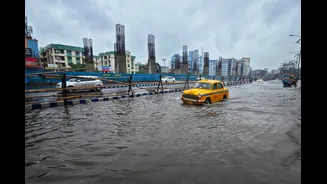
The ENSO cycle has another phase: La Niña, or 'The Little Girl'. This is essentially the opposite of El Niño. During a La Niña event, the trade winds become even stronger than usual, pushing more warm water towards Asia and causing an upwelling of deep, cold water in the eastern Pacific. For India, La Niña is often beneficial, typically associated with stronger monsoons, above-average rainfall, and colder winters, especially in the north. Understanding La Niña is important because it's the other side of the same coin; the planet swings between El Niño, La Niña, and neutral conditions, each bringing its own set of weather possibilities.
A Hotter Future: Climate Change and El Niño
A crucial question for today's generation is how climate change is affecting this natural cycle. Scientists are actively studying whether global warming is making El Niño and La Niña events more frequent or more intense. What is clear is that El Niño events now occur on top of a baseline of already higher global temperatures. This means that the heatwaves and temperature spikes associated with El Niño are becoming more extreme. Forecasts for the strong El Niño developing in 2026 suggest it could be one of the most intense on record, with international organisations urging nations to prepare for extreme weather. These events are no longer just a predictable part of our climate system; they are a preview of the increased volatility we may face in a warmer world.