





The Challenge of Abstract Engineering
Aerospace engineering is a field of immense complexity. Students must understand thermodynamics, fluid dynamics, structural mechanics, and intricate propulsion systems. Traditionally, this has been taught through lectures, textbooks, and limited access
to physical labs. While effective, this approach has its limits. A diagram of a gas turbine engine can only convey so much; a student can’t intuitively grasp the interplay of thousands of moving parts or the flow of hot gases from a static image. Physical mock-ups and labs are incredibly expensive, require significant space, and can be dangerous to operate for novices. This creates a gap between theoretical knowledge and the practical, three-dimensional intuition required to excel in the field.
Stepping Inside the Digital Twin
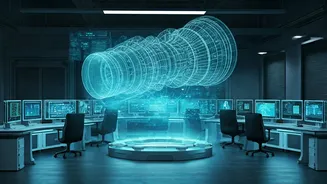
Virtual Reality (VR) is closing that gap by offering something previously impossible: the ability to step inside the machine. Using a VR headset, a student is no longer a passive observer but an active participant in a fully immersive digital laboratory. They can walk around a life-sized, photorealistic model of a launch vehicle, use their hands to disassemble a jet engine piece by piece, or witness the invisible forces of airflow over a wing, visualised as coloured streams. This concept, known as a “digital twin,” creates a perfect virtual replica of a physical object. This hands-on, spatial understanding is transformative. Concepts that were once abstract equations on a page become tangible, interactive experiences, leading to deeper and faster comprehension.
The AI as a Personal Tutor
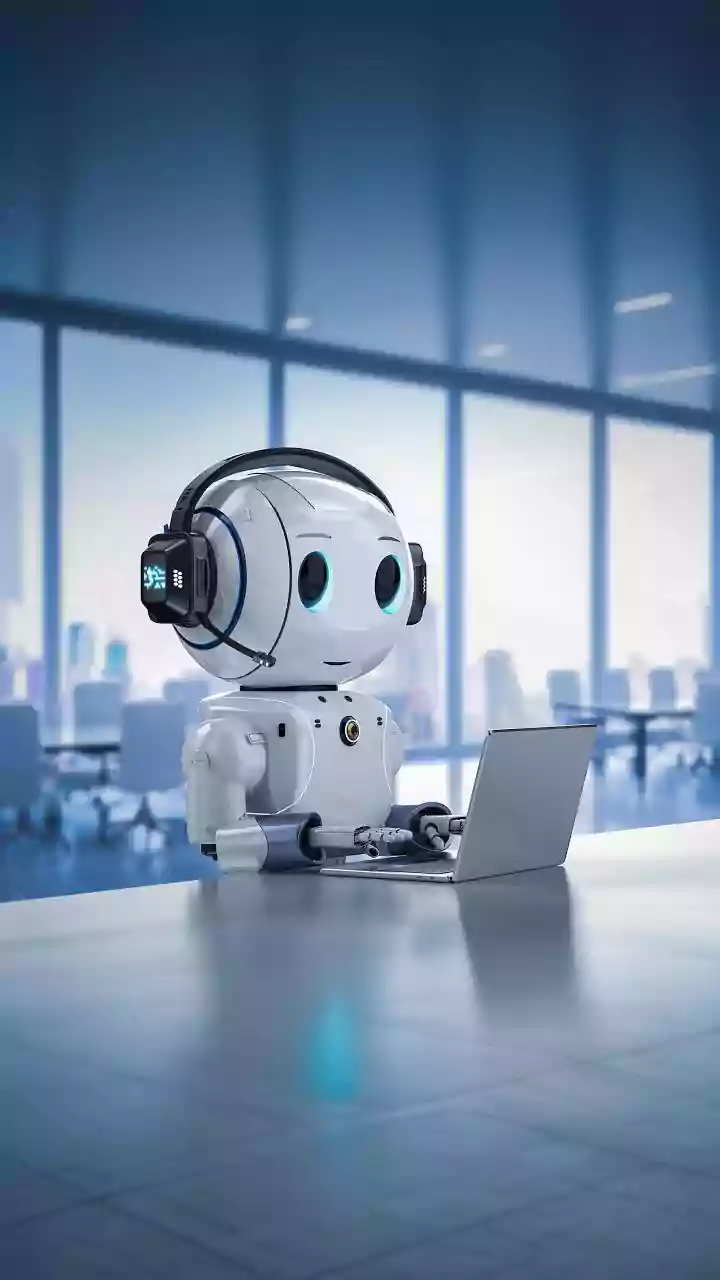
But a static 3D model is just a digital museum. The real revolution happens when Artificial Intelligence (AI) is integrated into the experience. The AI acts as an intelligent, ever-present tutor. As a student works on a virtual engine assembly, the AI can monitor their actions in real-time. If they try to fit a part in the wrong sequence, the system can highlight the error and provide a hint. It can simulate faults—like a fuel leak or an engine stall—and challenge the student to diagnose and fix the problem. The AI can adapt the difficulty of tasks based on the user's performance, ensuring they are always challenged but not overwhelmed. It can also generate endless scenarios, providing a platform for risk-free practice that would be impossible in the real world. This personalised, adaptive feedback loop is what makes these virtual classrooms so powerful.
Benefits Beyond the Classroom
The advantages of this VR/AI synergy are enormous. First, it democratises access. A student in any part of India could potentially access a world-class virtual lab that would otherwise only be available at a handful of elite institutions globally. Second, it's safer and more cost-effective. Students can make mistakes and learn from them without the risk of injury or damaging multi-million dollar equipment. Third, it accelerates learning and improves retention by engaging multiple senses and promoting active problem-solving over passive memorisation. For the aerospace industry, this means graduates who enter the workforce are not just book-smart, but have already developed a strong practical intuition and familiarity with complex systems. They are better prepared for the hands-on demands of designing, building, and maintaining the next generation of aircraft and spacecraft.