






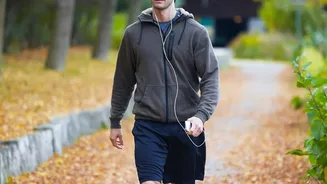

The Blood Sugar Balancing Act
After you eat, your body converts carbohydrates into glucose, which enters your bloodstream to be used as energy. A large or carb-heavy meal can cause a rapid spike in blood sugar. While this is a normal process, a sharp rise is often followed by a steep
crash, leaving you feeling tired and foggy. This is where a post-meal walk works its magic. When you engage in light physical activity like walking, your muscles need energy. To get it, they pull glucose directly from your bloodstream, effectively lowering the overall sugar peak. This process happens more efficiently right after eating, helping to prevent the dramatic highs and lows that lead to energy swings. For anyone, this means more stable energy throughout the afternoon, but for those managing insulin resistance or type 2 diabetes, this simple habit can be an especially powerful tool for blood sugar control.
A Gentle Boost for Digestion
Feeling bloated or overly full after lunch is a common complaint. A gentle walk can provide significant relief. The physical motion of walking stimulates peristalsis, the series of wave-like muscle contractions that move food through your digestive tract. Think of it as giving your digestive system a helpful nudge. Instead of sitting and letting your meal settle heavily, walking encourages more efficient processing. This can help prevent uncomfortable symptoms like gas, bloating, and indigestion. A short, leisurely stroll is all it takes to support this natural process, leaving you feeling more comfortable and lighter after your meal.
Why Timing and Pace Matter
To get the maximum blood sugar benefits, the timing of your walk is important. Research suggests that walking within 60 to 90 minutes after a meal is the sweet spot, as this is when blood glucose levels typically peak. The good news is that you don't need a long or strenuous workout. Studies have shown that even a walk as short as two to five minutes can start making a difference, with ten to fifteen minutes being an ideal and achievable goal for most people. The pace should be comfortable and leisurely, not a power walk. The goal is to stimulate your muscles and digestion gently, not to engage in an intense cardio session, which could divert blood away from your digestive system.
More Than Just a Physical Tune-Up
Beyond the direct benefits for digestion and glucose regulation, a midday walk offers a host of other advantages. Stepping away from your desk and getting some fresh air can be a powerful mental reset. It helps clear your head, reduce stress, and can even boost creativity and problem-solving skills for the rest of the workday. If you can walk outdoors, you also get the benefit of natural light, which helps regulate your body’s circadian rhythm, potentially leading to better sleep at night. Over time, these brief walks also contribute to your overall cardiovascular health by supporting healthy blood pressure and circulation.
How to Build the Habit Effortlessly
Incorporating this into your routine doesn't have to be complicated. Start small and make it convenient. Set a calendar reminder right after your typical lunch break. If you work in an office, ask a coworker to join you to stay accountable. You don't need a scenic park; a few laps around the building, a stroll through the parking lot, or even walking around your block works perfectly. The key is consistency. By linking the new habit (walking) to an existing one (eating lunch), you make it easier for your brain to adopt it as an automatic part of your day. Once you start noticing how much better you feel in the afternoons, the habit will become its own reward.