





From Fungus to Functional Material
When you picture a mushroom, you likely think of the cap and stem. But the real powerhouse is the vast, thread-like network underground called mycelium. This intricate web of fibres, known as hyphae, acts as a natural binder, breaking down and consuming
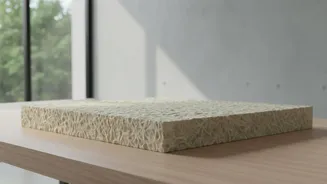
organic matter. Innovators have discovered how to harness this natural process for manufacturing. By feeding mycelium agricultural waste like sawdust, rice hulls, or straw in a controlled environment, they can grow a dense, rigid material. Within days, the mycelium network binds the waste particles together, forming a solid block that can be shaped into panels. The final step involves heating and drying the material to stop the growth, rendering it a stable and inert building component.
The Sustainability Advantage
The environmental benefits of mycelium insulation are profound. Unlike traditional insulation like fibreglass or polystyrene foam, which are energy-intensive to produce and derived from fossil fuels, mycelium is grown, not manufactured. The process requires very little energy and upcycles agricultural waste that might otherwise end up in a landfill. This makes mycelium a carbon-negative material, meaning it sequesters more carbon than is emitted during its production. Furthermore, at the end of a building's life, mycelium panels are fully biodegradable and can be composted, returning nutrients to the soil and contributing to a circular economy. They are non-toxic and do not release harmful volatile organic compounds (VOCs) into the air, promoting healthier indoor environments.
Putting Performance to the Test
For any building material to be viable, it must perform. Mycelium insulation holds its own against conventional options in several key areas. Its thermal performance, or R-value, is competitive, with studies showing it ranges from R-3 to R-4 per inch of thickness, similar to other natural insulations and effective for many climates. One of its most impressive qualities is its natural fire resistance. The material tends to char rather than ignite and spread flames, a significant safety advantage over plastic-based foams. It is also moisture-resistant and offers excellent acoustic absorption, making it a versatile material for walls and ceilings. This combination of thermal, fire, and acoustic properties makes it an attractive, multi-functional product for builders.
Barriers to Mainstream Adoption
Despite its many benefits, mycelium insulation is not yet a common sight on construction sites. One of the biggest hurdles is scaling up production to meet the massive demands of the construction industry while keeping costs competitive. While the raw materials are cheap, the growth process can be time-consuming and requires precise environmental controls. Another challenge is the need for standardization and building code certification. Before architects and builders can widely adopt a new material, they need consistent data on its long-term durability and performance, which is still being established for mycelium composites. Finally, although it's water-resistant, it cannot become fully soaked, as this could reactivate the fungus, meaning it must be properly protected from the elements during and after construction.