


What You Are Looking For
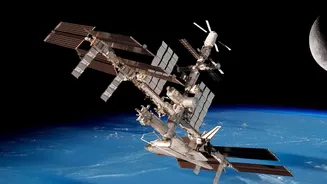
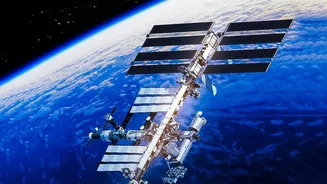
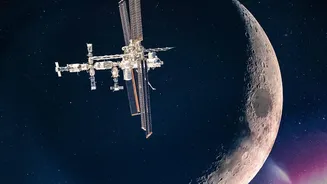
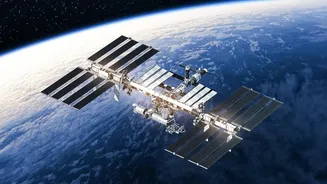
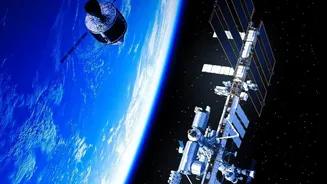
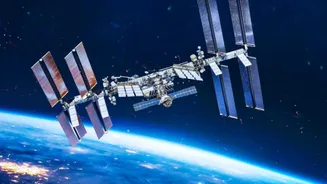
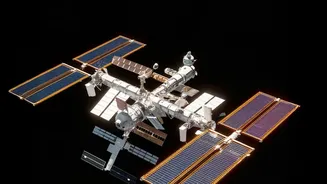
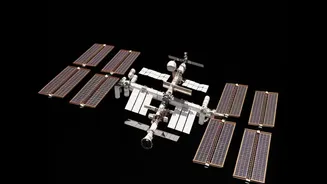
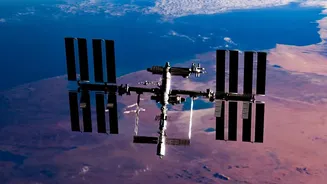
Forget what you’ve seen in movies. To the naked eye, the ISS doesn’t look like a complex structure; it looks like a very bright, fast-moving star. Unlike an aeroplane, it won’t have blinking lights. Instead, it appears as a steady, brilliant white dot
of light moving silently and purposefully across the night sky. It travels at about 28,000 kilometres per hour, so its journey across your field of view is relatively quick, usually lasting a few minutes. The station is visible because its massive solar panels reflect sunlight back to Earth. This makes it the third brightest object in the night sky after the Moon and Venus.
The Golden Hours: When to Look
Timing is everything. The ISS is only visible during the twilight hours—specifically, the first couple of hours after sunset and the last couple before sunrise. This is the magic window when the sky on the ground is dark, but the station, orbiting about 400 kilometres above Earth, is still high enough to be illuminated by the sun. During the middle of the day, the sky is too bright to see it. In the middle of the night, the station passes through Earth's shadow and is no longer reflecting sunlight, making it invisible. Your viewing opportunities can range from several times a week to just once a month, depending on the station's orbital path.
Your Personal Viewing Guide
The single best tool for viewers is NASA's own 'Spot The Station' service. You can visit the website and enter your location to get a list of upcoming sighting opportunities. The process is simple: select India from the country list, then find your nearest city. The site will provide a list of dates, start times, the duration of the pass, the maximum height it will reach in the sky, and the directions in which it will appear and disappear. For even greater convenience, you can sign up for email or text message alerts. NASA sends these notifications a few hours before a good viewing opportunity—typically one where the station will appear higher than 40 degrees above the horizon, making it clearly visible above trees and buildings.
Helpful Apps for Tracking
While NASA's alerts are fantastic, a good astronomy app can make the experience even more interactive. Apps like SkyView or Star Walk 2 use your phone's GPS and compass to show you exactly where to look in the sky in real-time. You can simply hold your phone up, and the app will overlay the path of the ISS onto your view. Others, like Heavens-Above and Stellarium Mobile, provide detailed pass predictions and star charts. Many of these apps have free versions that are more than sufficient for tracking the ISS. They can help you distinguish the station from other satellites or planets, ensuring you are looking at the right object.
Tips for the Best Sighting
You don't need any special equipment like a telescope or binoculars; the ISS is bright enough to be seen with the naked eye. For the best experience, find a viewing spot with a clear, unobstructed view of the horizon, preferably away from the glare of city lights. Give your eyes about 15-20 minutes to adjust to the darkness; this will make a huge difference in what you can see. Arrive a few minutes before the pass is scheduled to begin. A sighting list will tell you the 'maximum height' in degrees—90 degrees is directly overhead, while 0 is the horizon. A pass with a higher maximum height will be brighter and visible for longer, making it more impressive. Sometimes, the station may seem to suddenly fade out mid-pass; this is normal and happens when it enters Earth's shadow.