


The Sun’s Violent Outbursts
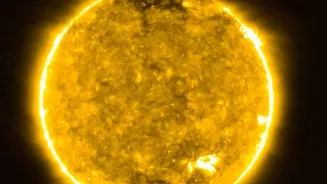
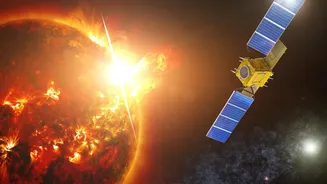
Space weather refers to the changing conditions in space, driven primarily by the Sun's activity. The main culprits are solar flares and coronal mass ejections (CMEs). A solar flare is an intense burst of radiation, while a CME is a massive eruption of plasma
and magnetic fields from the Sun's outer atmosphere, the corona. When these phenomena are directed towards Earth, they can cause significant disturbances in our planet’s magnetic field, known as geomagnetic storms. While these storms can produce beautiful auroras, they pose a serious threat to our technological infrastructure.
Satellites in the Firing Line
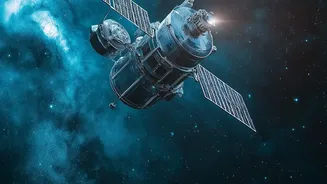
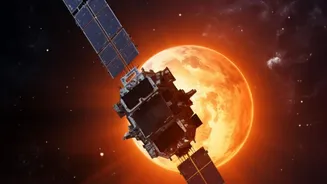
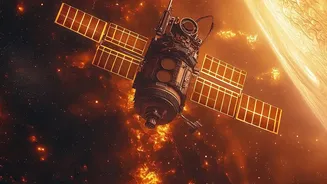
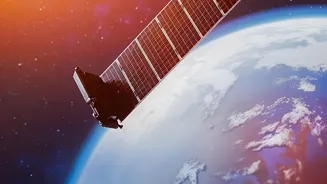
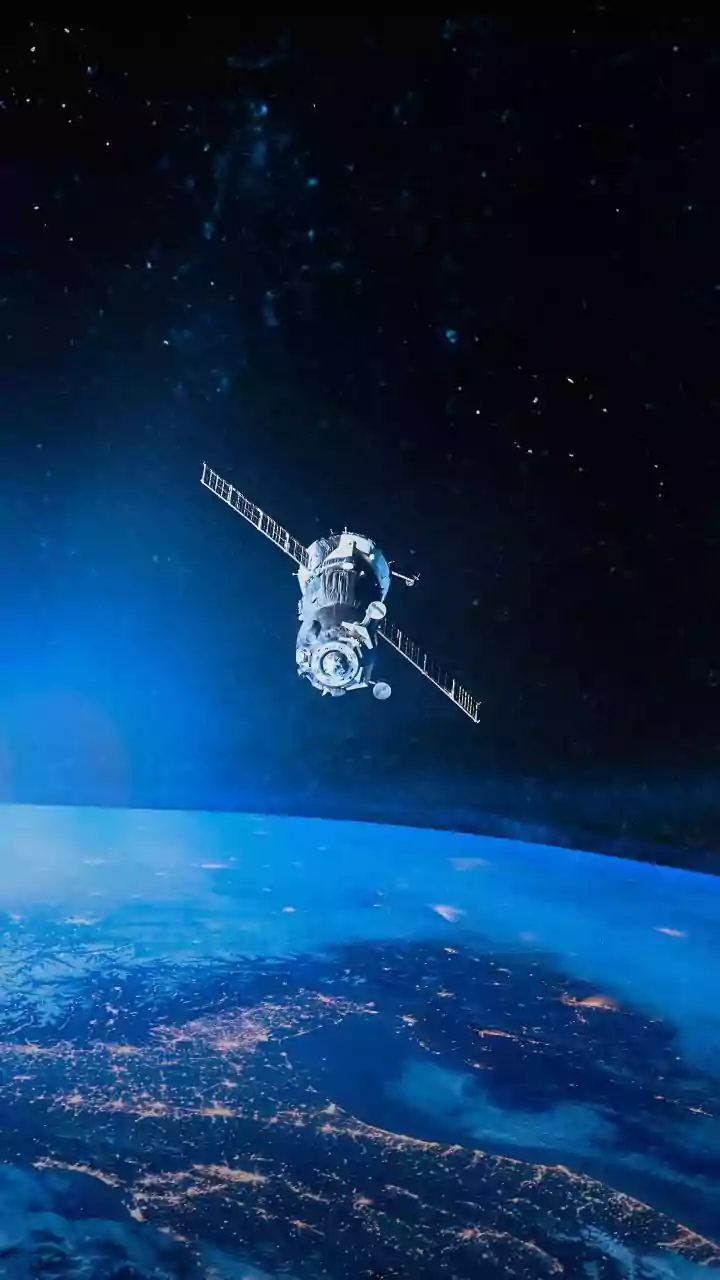
Satellites orbiting outside Earth’s protective atmosphere are highly vulnerable. Intense solar radiation can damage their sensitive electronics and degrade their solar panels over time. A major geomagnetic storm heats and expands Earth's upper atmosphere, increasing atmospheric drag on satellites in low Earth orbit. This can cause them to lose altitude and, in severe cases, re-enter the atmosphere prematurely. Furthermore, charged particles can cause phantom commands, disrupt GPS signals, and interfere with the radio frequencies used for communication between satellites and ground stations. In February 2022, a geomagnetic storm was blamed for the failure of a batch of newly launched Starlink satellites.
Our Watchful Eyes on the Ground
This is where ground observatories come in. While space-based telescopes provide a crucial, uninterrupted view of the Sun, ground-based instruments form the backbone of space weather monitoring. They are less expensive to build, maintain, and upgrade. A coordinated network of solar telescopes, radio telescopes, and magnetometers across the globe constantly watches the Sun. Solar telescopes track sunspots—dark, magnetically active regions that are often precursors to flares. Magnetometers measure disturbances in Earth's magnetic field, providing real-time data on geomagnetic activity. This constant stream of data from different locations allows for 24/7 monitoring.
India's Crucial Role in Solar Watchkeeping
India is a significant player in this global effort. ISRO has signed agreements with institutions like the Aryabhatta Research Institute of Observational Sciences (ARIES) in Nainital to bolster cooperation in Space Situational Awareness and space weather studies. ARIES, with its specialised telescopes and expertise in solar physics, is a key partner. This collaboration knits data from ground observatories with space-based assets like the Aditya-L1 mission. Launched by ISRO, Aditya-L1 is India's first dedicated solar observatory, positioned 1.5 million km from Earth to provide an early warning of solar storms. This integrated approach, combining ground and space observations, is vital for creating accurate forecasts.
From Observation to Action
When ground observatories and space missions detect a threatening solar event, the data is fed into sophisticated computer models at space weather prediction centres, like those run by NOAA in the US or ISRO in India. These models forecast the storm's arrival time and potential intensity. Based on these forecasts, agencies issue alerts, watches, and warnings. For satellite operators, an early warning of even 30-60 minutes can be enough to take protective measures, such as putting sensitive electronics into a safe mode, reorienting the spacecraft to protect key instruments, or postponing manoeuvres. This proactive approach helps mitigate damage and ensures the continuity of the services we rely on, from navigation and telecommunications to banking and weather forecasting.