

Why the Renewed Interest?
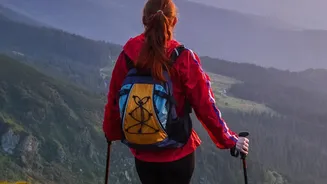
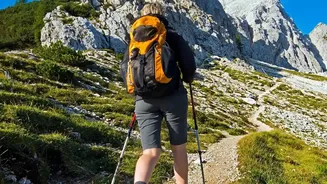
Originally developed in Finland as a summer training method for cross-country skiers, Nordic walking has found a modern resurgence. It transforms a simple walk into a comprehensive exercise by engaging up to 90% of your body's muscles, compared to about
50% with regular walking. This increased muscle engagement means you burn significantly more calories—with some estimates suggesting an 18% to 67% increase—without feeling proportionally more exhausted. The use of poles also provides stability and reduces the load on lower-body joints like knees and hips, making it an accessible option for people of all fitness levels, including those with chronic pain or balance concerns.
The Core of the Technique
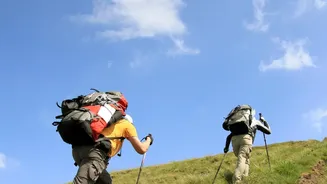
The fundamental movement of Nordic walking is based on your natural walking rhythm. It involves coordinating your opposite arm and leg: as your right leg steps forward, your left arm swings forward with the pole, and vice versa. The key is not to simply plant the pole vertically like a hiking stick, but to place it at an angle between your front and back foot. From there, you push the pole backward to propel your body forward. This movement should come from the whole body, with a slight forward lean from the ankles and a relaxed, upright posture. As you push off, your hand should open at the end of the swing, guiding the pole back in a smooth, flowing motion.
Common Mistakes to Avoid
Many beginners make a few common errors that limit the workout's effectiveness. The most frequent mistake is treating the poles as walking canes for balance rather than tools for propulsion. This often involves planting the pole too far in front of the body, which can strain joints and slow you down. Another issue is keeping a constant, tight grip on the handles; the technique requires you to open your hand at the end of the push-off. Others forget to engage their upper body, using only their arms with bent elbows instead of pushing from the shoulder. Finally, some fall into an 'amble' or 'pacing' rhythm, moving the arm and leg on the same side together, which disrupts the natural torso rotation that is key to the exercise.
Choosing the Right Poles
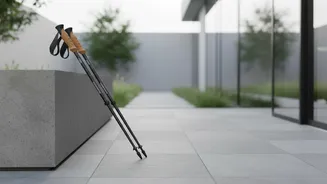
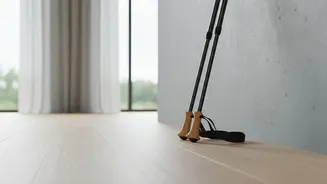
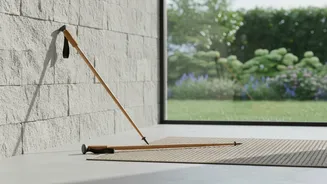
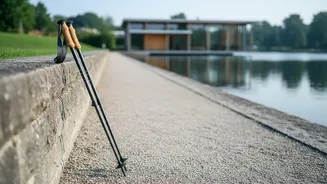
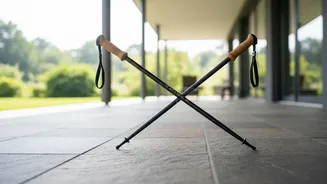
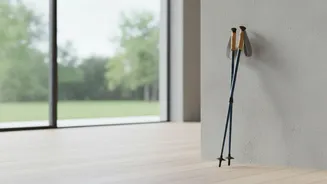
Your poles are your most important piece of equipment, and the right fit is crucial. Unlike trekking poles, Nordic walking poles come with a special glove-like strap that allows for the correct push-and-release technique. The most critical factor is length. If poles are too short, you may hunch over; if they are too long, your propulsion will be inefficient and you might strain your shoulders. To find the right size, use the simple formula of your height in centimetres multiplied by 0.68. Alternatively, a good rule of thumb is to select a pole length that allows your elbow to be at a 90-degree angle when you stand with the pole tip on the ground. While lightweight aluminium poles are available, models with at least 50% carbon are recommended as they absorb vibrations better, reducing stress on your joints.