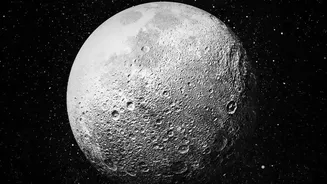




Beyond the orbit of Neptune lies the Kuiper Belt, a vast, frozen expanse filled with icy remnants from the dawn of our solar system. New findings from NASA are piercing through the mystery, revealing that this distant realm may have had a wetter past.
The Solar System's Frigid Frontier
The Kuiper Belt is a massive, donut-shaped ring of icy bodies circling the sun far beyond the most distant planets. Think of it as a larger, icier cousin to the asteroid belt found between Mars and Jupiter. This region, starting around Neptune's orbit at 30 times the Earth-sun distance, is home to millions of frozen objects, including dwarf planets like Pluto, Haumea, and Makemake. For a long time, scientists have considered these objects to be pristine, deep-frozen relics from the solar system's formation some 4.5 billion years ago. Because they are so far from the sun's warmth, the assumption has been that they are essentially unchanged, offering a direct window into the primordial materials that built our planetary neighborhood.
Reading Clues in Cosmic Dust
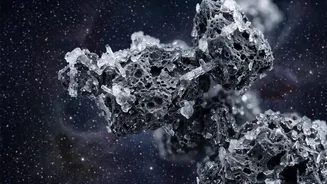
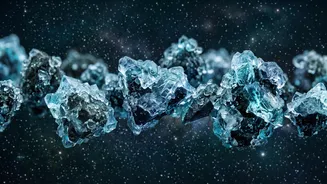
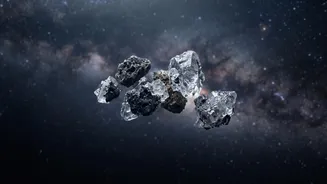
It is incredibly difficult and expensive to send missions to land on and retrieve samples from the Kuiper Belt. However, tiny dust particles, knocked off these distant objects by collisions or other impacts, can travel all the way to Earth's upper atmosphere. A team led by NASA planetary scientist Lindsay Keller studied twelve of these minuscule interplanetary dust grains collected from the stratosphere. They found that the grains were packed with carbon and hydrated minerals—specifically clays like saponite and serpentine—that can only form through chemical reactions with liquid water. This finding was a major surprise, as it strongly implies that the parent bodies these dust grains came from must have contained liquid water at some point in their history.
A Unique Fingerprint of Heavy Water
The discovery went deeper than just the presence of water-altered minerals. When the scientists analyzed the oxygen within these minerals, they found it had a unique isotopic signature. The water that formed these minerals was unusually rich in 'heavy' oxygen isotopes, which are stable, non-radioactive versions of the element with extra neutrons. This isotopic fingerprint is distinctly different from the water found in meteorites that formed closer to the sun. The finding provides compelling evidence that a major reservoir of heavy water existed in the outer solar system. According to researchers, this distant water source remained largely isolated, untouched by the chemical mixing and churning that occurred in the inner solar system as the planets were forming.
A Warmer Past for an Icy Realm?
But how could liquid water have existed in a region where surface temperatures hover around a frigid 50 Kelvin (about -223 degrees Celsius)? While the Kuiper Belt is frozen solid today, the study suggests that the interiors of some of the larger Kuiper Belt Objects (KBOs) could have been warmed in the distant past. This internal heat may have been generated by the decay of radioactive elements within their rocky cores or from the energy of massive collisions. This would have been enough to melt the ice deep inside these bodies, allowing liquid water to react with rock and form the minerals now seen in the dust grains. Though that ancient internal ocean is long gone, its chemical signature remains locked away in these tiny messengers from the solar system's edge.
Rewriting the Story of Our Solar System
This discovery reshapes our understanding of the solar system's history. The idea that a separate, pristine reservoir of water existed so far from the sun challenges previous models of planetary formation. It suggests the outer reaches of our solar system were not just a uniform expanse of inert ice but a dynamic region with the potential for complex chemistry. The presence of liquid water, even if it was temporary and buried deep inside icy worlds, pushes back the boundaries of where the building blocks of life might have been available. It adds to a growing body of evidence, including from missions like New Horizons, that the Kuiper Belt is a far more complex and active place than once imagined, possibly extending much farther out than we currently know.