




An Accomplishment Worth Celebrating
Let's be clear: the pride in Anil Menon is entirely justified. Born in Minnesota to Indian and Ukrainian immigrants, his journey to becoming a NASA astronaut is remarkable. He isn't just an astronaut; he is a lieutenant colonel in the U.S. Air Force,
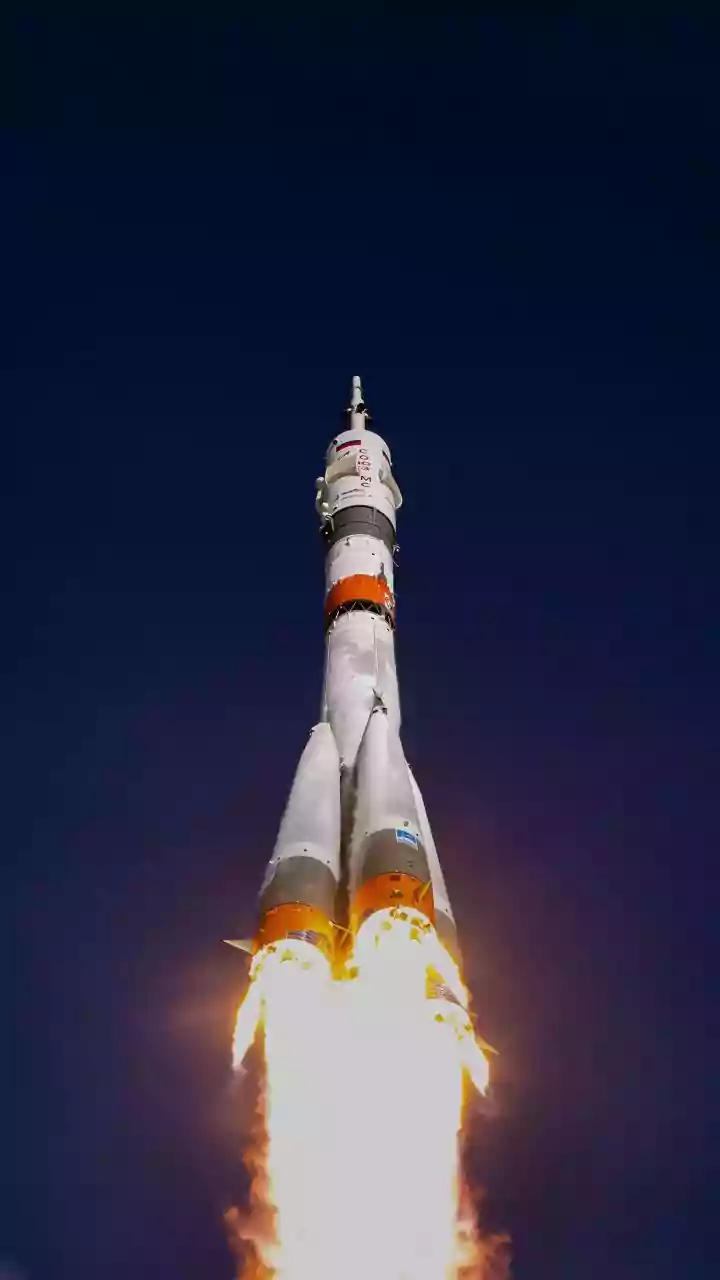
an emergency physician, and was SpaceX's first-ever flight surgeon, where he helped launch the first private crewed mission. His resume is a testament to extraordinary dedication, with degrees in neurobiology from Harvard and both medicine and mechanical engineering from Stanford. He has served as a first responder in disasters in Haiti and Nepal and flew over 100 sorties in an F-15. His selection from over 12,000 applicants for NASA's 2021 astronaut class underscores his exceptional capabilities. So when he launches aboard a Soyuz spacecraft on July 14, 2026, for an eight-month mission, it is the culmination of a lifetime of achievement.
The Danger of Reductive Hype
The narrative, however, often gets simplified to "Indian-origin astronaut goes to space." While his heritage is an important part of his story—he even spent a year in India as a Rotary Scholar supporting polio vaccination efforts—it is not the entirety of it. Reducing his complex identity and incredible professional journey to a simple label does him a disservice. He is an American astronaut representing a U.S. space agency. The story is more nuanced than one of national appropriation; it's one of diaspora success, multicultural identity, and global collaboration. Previous Indian-American astronauts like Kalpana Chawla and Sunita Williams became icons, but their stories were also rooted in their scientific contributions and personal drive, not just their origins. By focusing only on the "Indian-ness" of his success, we risk turning a story of profound human achievement into a jingoistic talking point.
The Science Is The Real Story
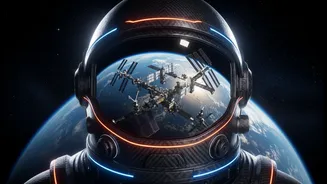
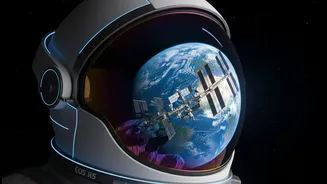
The most vital context missing from the hype is the mission itself. Astronauts are, first and foremost, scientists and explorers. Menon's eight-month stay on the ISS as part of Expedition 74 is packed with critical research. He will be studying the physiological effects of microgravity on the human body, specifically changes to vein structure and blood flow. This research is crucial for enabling long-duration missions to the Moon and Mars. He will also be involved in testing methods to produce intravenous fluids from the station's water supply—a technology that could be revolutionary for deep-space missions where supplies are limited. Another key experiment involves refining the in-space production of semiconductor crystals, which could lead to breakthroughs in computing and medical devices back on Earth. This is the real substance of his mission: pushing the boundaries of science for the benefit of all humanity.
A More Inspiring Narrative
Instead of simply celebrating where his parents came from, we have an opportunity to build a more inspiring and educational narrative. Let's talk about why a neurobiology degree from Harvard and a mechanical engineering degree from Stanford are a powerful combination for an astronaut. Let's discuss what a flight surgeon does and why SpaceX needed one to safely send humans to orbit. Let's use this moment to get young people in India excited about materials science, aerospace medicine, and the collaborative nature of the International Space Station, a joint orbital laboratory involving multiple space agencies. This is a chance to highlight the value of STEM education and international cooperation. Menon's journey shows that excellence has no single nationality and that the pursuit of knowledge is a universal goal.