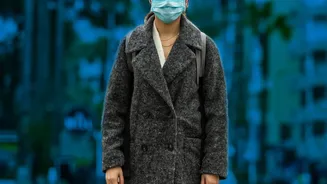


As pollution levels rise, many parents reach for a mask to protect their children. But with so many options, it's hard to know which ones work. Not all masks are created equal, and common choices like cloth and surgical masks have serious limitations.
Why Most Masks Fail Against Pollution
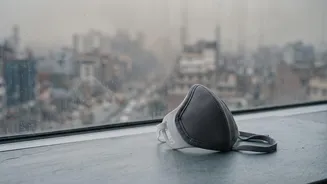
The primary threat in polluted air is fine particulate matter, or PM2.5. These microscopic particles are small enough to bypass the body's natural defences, penetrating deep into the lungs and even entering the bloodstream. Children are especially vulnerable because their lungs are still developing and they breathe in more air relative to their body weight than adults. Unfortunately, the masks most readily available are not designed to stop these tiny particles. Both simple cloth masks and standard blue surgical masks are primarily intended to block large respiratory droplets, not filter fine airborne pollutants.
The Limits of Cloth Masks
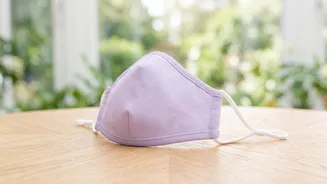
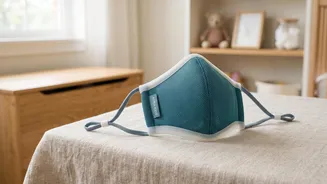
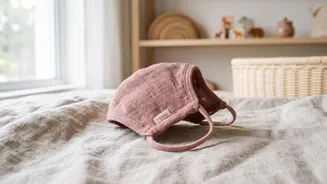
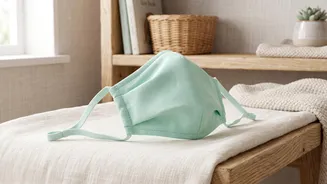
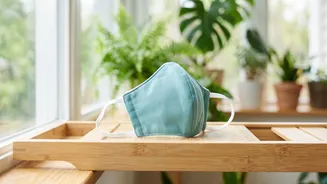
A simple cloth mask, even with multiple layers, offers very little protection against PM2.5. Studies show their filtration efficiency for these fine particles can be as low as 10-30%. The weave of the fabric is simply too porous, allowing pollutants to pass through easily. Furthermore, they rarely provide a snug fit, leaving large gaps around the nose, cheeks, and chin. Air will always follow the path of least resistance, meaning your child is likely breathing in unfiltered air from the sides of the mask rather than through the fabric. While better than nothing for blocking large dust particles, they are not a meaningful solution for toxic air quality.
Surgical Masks: A Misleading Solution
Surgical masks perform better than cloth masks because their material is designed to filter particles. They can block between 60-80% of particulates under ideal conditions. However, their primary design is for clinical settings to prevent the spread of germs via droplets. Like cloth masks, their biggest failing is their loose fit. They are not designed to create a seal against the face, leaving significant gaps that allow polluted air to leak in. For this reason, paediatricians and air quality experts agree that surgical masks are not sufficient for protecting children from high levels of air pollution.
The Right Choice: Certified Respirators
For meaningful protection against PM2.5, experts recommend a certified respirator mask, such as an N95, KN95, or FFP2. The '95' or '2' in the name signifies that the mask is certified to filter at least 95% (or 94% for FFP2) of airborne particles down to 0.3 microns when worn correctly. These masks are made from multiple layers of non-woven fabric that mechanically and electrostatically trap fine particles. Unlike cloth or surgical masks, they are specifically engineered to protect the wearer from inhaling hazardous airborne contaminants.
Fit is as Critical as Filtration
Simply buying a certified respirator is not enough; it must fit correctly. An ill fitting N95 offers little more protection than a surgical mask because of leaks. The mask must form a tight seal around your child's nose, across their cheeks, and under their chin. Finding a proper fit for a child can be challenging, as their faces are smaller and have different proportions. Never use a knotted or folded adult mask on a child, as this compromises the seal. Look for respirators specifically designed for children, which often feature adjustable straps and a flexible nose clip to help create a secure fit. If your child's glasses fog up or you can feel air escaping from the sides, the fit is not right.
A Parent's Checklist for Choosing a Mask
When shopping for a child's pollution mask, prioritise function over fashion. Ignore cartoon prints unless the mask itself meets protection standards. Look for certification markings like N95, KN95, or FFP2 printed on the mask. Choose a size designed for children and ensure it has adjustable straps and a good nose wire. Children under the age of two should not wear masks due to suffocation risks. For older children, especially those with respiratory conditions, it’s important they can wear the mask comfortably without it causing breathing difficulty. If a proper fitting respirator is not available or tolerated, the safest option during periods of high pollution is to limit time outdoors.