






Why Studying Causes the 'Student Slump'
When you're deeply focused on studying, your posture is often the last thing on your mind. Many students develop a 'student slump'—a forward-hunching posture where the head juts forward, and the shoulders round. This position puts significant strain on the neck
and upper back muscles, particularly the trapezius. Over time, this prolonged static posture leads to muscle tension, stiffness, and sometimes even headaches. The stress of academic pressure can also cause you to unconsciously tense your shoulders, making the problem even worse. Taking short, active breaks to counteract this posture is crucial for preventing chronic pain.
Stretch 1: Cow Face Pose Arms (Gomukhasana)
This powerful stretch targets the shoulder joints, chest, and triceps, making it perfect for releasing built-up tension. You can do this while seated in a chair, making it ideal for a quick study break. How to do it: Sit up tall. Reach your right arm straight up, then bend the elbow so your right hand is behind your neck. Reach your left arm behind your back, aiming to clasp the fingers of both hands. If your fingers don't touch, simply hold onto a strap or a piece of cloth between your hands. Hold for 20-30 seconds, breathing deeply to open the chest, then gently release and switch sides. This pose improves shoulder flexibility and promotes better posture.
Stretch 2: Thread the Needle Pose (Urdhva Mukha Pasasana)
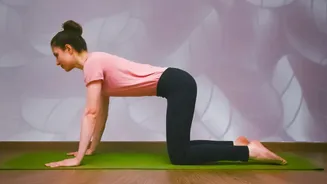
A gentle twist, Thread the Needle is excellent for releasing the upper back and the muscles between the shoulder blades. It's a restorative pose that calms the nervous system while providing a deep stretch. How to do it: Start on your hands and knees in a tabletop position. Inhale, and on your exhale, slide your right arm underneath your left, with your palm facing up. Gently lower your right shoulder and the side of your head to the floor. To deepen the stretch, you can walk your left fingertips forward or wrap your left arm behind your back. Hold for about 30 seconds, focusing on the release in your upper back, before pressing into your left hand to return to the start and repeating on the other side.
Stretch 3: Eagle Pose Arms (Garudasana)
This stretch is one of the most effective for the upper back and shoulders, specifically targeting the rhomboid muscles that often get tight from hunching. The best part is that you can do it anytime, even while sitting at your desk. How to do it: Extend both arms forward, parallel to the floor. Cross your right arm over your left. Bend your elbows, wrapping your forearms around each other until your palms can press together. Gently lift your elbows while drawing your shoulders down, away from your ears. You should feel a wonderful stretch across your upper back. Hold for five deep breaths, then unwind and repeat with the left arm over the right. This improves posture and alleviates pain associated with a sedentary lifestyle.
Making Stretching a Habit
The key to finding lasting relief is consistency. Just a few minutes of stretching every hour can make a huge difference. Set a timer on your phone to remind you to take a break. Get up, walk around, and perform one or two of these stretches. Even simple movements like shrugging your shoulders up to your ears and then releasing them down, or gently rolling your neck from side to side, can help break the cycle of tension. Listen to your body; the goal is to feel a gentle stretch, not pain. Over time, these small breaks will not only protect your body but also help refresh your mind for more effective studying.