








The Big Picture: What Is Changing?
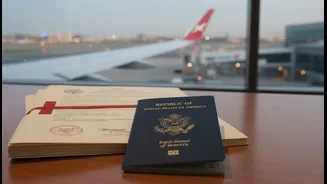
For many Indians dreaming of a life in the UK, Australia, or Canada, proving English proficiency is a critical step. Recently, all three countries have updated their rules, but in different ways. The UK has raised the required skill level for work visas.
Australia has adjusted score requirements for the popular PTE Academic test and expanded its list of accepted tests. Meanwhile, Canada now accepts more tests for both study and immigration, giving applicants more choice. These updates mean that the test you take and the score you need might be different from what was required just a year ago. The key is to know which rules apply to your specific visa and destination.
For UK-Bound Professionals: A Higher Bar
If you're applying for a UK Skilled Worker, Scale-Up, or High Potential Individual visa, the language requirement has become tougher. As of early 2026, new applicants must demonstrate B2-level English proficiency, an 'upper-intermediate' standard, up from the previous B1 'intermediate' level. This change, which came into effect on January 8, 2026, applies to new applications and even some renewals. The government's goal is to ensure migrants can communicate more effectively in the workplace. For applicants, this means aiming for a higher score, roughly equivalent to an IELTS score of 5.5 to 6.5, on an approved Secure English Language Test (SELT). A further change is planned for March 2027, when the requirement for settlement (Indefinite Leave to Remain) will also rise to B2.
Australia: New Scores for PTE and More Test Options
Australia has rolled out significant updates, primarily affecting tests taken from August 7, 2025. A major change is how PTE Academic scores are assessed. Instead of a uniform score across all sections, the minimum scores for listening, reading, writing, and speaking now vary. For many visas, the required scores for writing and speaking have increased, while listening and reading have slightly decreased. The good news is that Australia has also broadened its list of accepted tests, adding options like CELPIP General and the Michigan English Test (MET). However, a crucial rule is that all tests must now be taken at a secure, in-person test centre; fully online or at-home tests are no longer accepted for visa purposes. IELTS requirements have largely remained stable.
Canada: Greater Flexibility for Students and Immigrants
Canada has opened its doors to a wider range of English tests. For economic immigration pathways like Express Entry, applicants can now choose from IELTS General Training, CELPIP-General, and the newly approved PTE Core. This gives candidates more flexibility in finding a test format that suits their strengths. For students, while IELTS remains popular, institutions now commonly accept TOEFL iBT and PTE Academic as well. It is important to note that while the immigration department (IRCC) has broadened test acceptance, individual universities set their own specific score requirements. Most undergraduate programs look for an overall IELTS score of 6.0 to 6.5, with postgraduate programs often requiring 6.5 to 7.0.
Your Next Steps: How to Plan
With these evolving rules, staying informed is crucial. First, identify the specific visa or university program you are targeting. Their official websites are the most reliable source for the latest requirements. Second, verify which English tests are accepted and the minimum scores needed for each component—not just the overall score. For Australia, if you took a test before August 7, 2025, your results may still be valid under the old rules, so check the validity period. For the UK, if you're applying for a work visa, ensure you are preparing for the higher B2 standard. Given that test scores are typically valid for two years, plan your test date carefully so your results don't expire before you can submit your application.