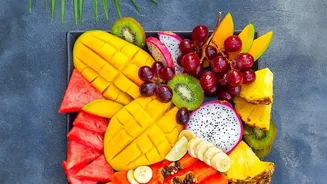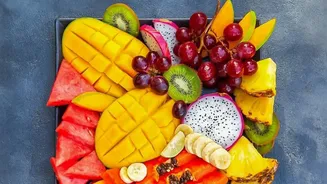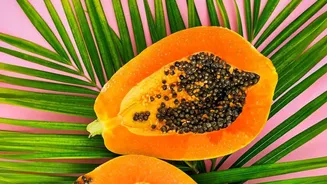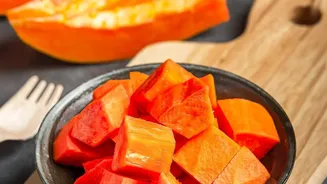




Mango and papaya are beloved staples of the Indian fruit basket. Both are sweet, tropical, and packed with goodness. But when you look closely at their nutritional profiles, some key differences emerge that might make one a better choice for you.
The Tale of Two Tropical Titans
On the
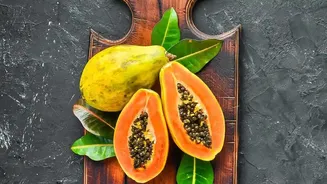
surface, mango and papaya are both celebrated stars of summer. Mango, the undisputed 'King of Fruits', is prized for its rich, sweet flavour and creamy texture. Papaya, with its softer flesh and milder, musky sweetness, is a year-round favourite often eaten at breakfast to kickstart the day. While both grace our tables and offer a taste of the tropics, their nutritional scorecards reveal distinct personalities.
Calories and Sugar: The Lighter Choice
For those managing their weight or sugar intake, papaya has a clear advantage. A 100-gram serving of papaya contains approximately 43 calories and about 7.8 grams of sugar. In contrast, the same amount of mango has around 60 calories and a significantly higher sugar content of about 13.7 grams. This makes papaya the lower-calorie, lower-sugar option, offering more fruit volume for fewer calories and less sugar, which can be beneficial for weight management.
The Vitamin C Champion
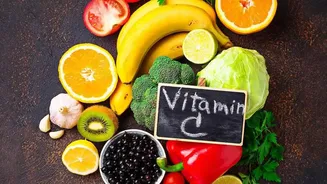
When it comes to boosting immunity, both fruits are excellent sources of Vitamin C, but papaya takes the lead. A 100-gram portion of papaya provides around 61 mg of Vitamin C, which is a significant portion of the daily recommended intake. Mango is also a good source, offering about 36 mg for the same serving size. So, if your primary goal is to load up on this essential antioxidant for immune support and skin health, papaya has a noticeable edge.
Vision and Skin Health: The Vitamin A Victor
While papaya wins on Vitamin C, mango is the clear winner for Vitamin A. Mango is rich in beta-carotene, the antioxidant pigment that gives the fruit its beautiful golden-orange colour, which the body converts into Vitamin A. This vitamin is crucial for maintaining good vision, supporting immune function, and promoting healthy skin. Papaya also contains Vitamin A, but in lesser quantities than mango.
Digestive Health: A Tale of Two Enzymes
Here, both fruits shine but for different reasons. Papaya is famous for containing a unique enzyme called papain. Papain is a proteolytic enzyme, meaning it helps break down proteins, which can aid digestion, reduce bloating, and ease constipation. Mangoes, on the other hand, contain amylase enzymes. These enzymes help break down carbohydrates and starches, assisting in their digestion. Both fruits are also good sources of dietary fibre, which is essential for a healthy digestive system.
Unique Compounds and Glycemic Index
Beyond the basic vitamins, each fruit has a unique star compound. Mangoes contain mangiferin, a powerful antioxidant polyphenol studied for its anti-inflammatory and other health-promoting properties. Papayas are a source of lycopene, another potent antioxidant also found in tomatoes and watermelon. Interestingly, despite having more sugar, mangoes tend to have a lower glycemic index (GI) of around 51, compared to papaya's GI of about 59. This means mango may cause a slightly slower rise in blood sugar levels, which is a crucial consideration for individuals managing diabetes.
So, Which Fruit Is Better for You?
The 'better' fruit truly depends on your personal health goals. Choose papaya if your focus is on:
- Weight management, due to its lower calorie and sugar content.
- Boosting Vitamin C intake for enhanced immunity.
- Aiding protein digestion, thanks to the enzyme papain.
Choose mango if your focus is on:
- Increasing your Vitamin A intake for eye and skin health.
- A potentially steadier blood sugar response, due to its lower glycemic index.
- Benefitting from the unique antioxidant mangiferin.