





Recent reports of Air Quality Index (AQI) readings soaring past an almost unbelievable 1,000 in cities like Bikaner and Bathinda have sparked widespread alarm. But what do these numbers really mean? Here’s the context you need to understand them.
An Unprecedented Pollution Spike
In early
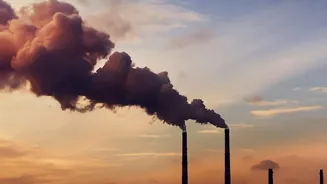
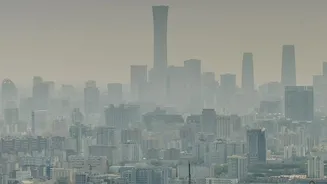
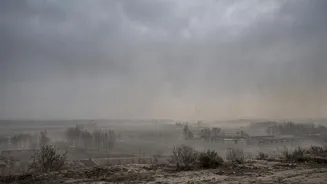
November 2026, several private air quality monitoring apps showed staggering AQI figures in parts of North India, with Bathinda in Punjab reportedly crossing 1,100. Bikaner in Rajasthan also saw numbers break the 1,000 mark. These readings, far beyond the standard 0-500 scale which tops out at 'Hazardous', created significant concern. The primary pollutants identified were PM2.5 and PM10, the tiny, harmful particles that can penetrate deep into the lungs and bloodstream. The immediate cause for this severe pollution event is a combination of factors: post-harvest stubble burning in Punjab and neighbouring states, vehicular and industrial emissions, and meteorological conditions like low wind speed and temperature inversion that trap pollutants near the ground.
Official vs. Third-Party Data: Why Numbers Differ
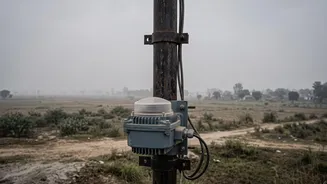
While third-party apps reported these shocking figures, a crucial question arises: why do they often differ from official government data? The answer lies in the technology and methodology. Government bodies like the Central Pollution Control Board (CPCB) use a limited number of highly accurate, expensive, and regularly calibrated 'reference-grade' monitoring stations for regulatory purposes. These stations provide a reliable, but less granular, overview of air quality. In contrast, many popular apps and websites use data from a 'crowdsourced' network of lower-cost, consumer-grade sensors. These sensors, often bought and installed by individuals, provide hyperlocal, real-time data that official stations might miss.
The Technology Gap Explained
Official CPCB stations use sophisticated, analyser-based instruments designed for high precision and legal traceability. They undergo rigorous calibration to ensure the data is reliable for policymaking. Third-party sensors often use a different technology, such as light-scattering laser sensors, to estimate particulate matter. While effective for raising awareness, these can be less accurate and susceptible to influences like high humidity, which can sometimes lead them to overestimate pollution levels. Furthermore, the placement of a private sensor—for instance, next to a busy road, a generator, or a local dust source—can result in a very high reading that reflects a micro-environment, not the broader air quality of a neighbourhood.
What Does an AQI Above 500 Even Mean?
The official AQI scale is designed to max out at 500, which is classified as 'Hazardous' or 'Severe+'. At this level, the air is considered dangerous for everyone, not just vulnerable groups. There is no official calculation for what an AQI of 1,000 means, as it's far beyond the defined public health emergency level. However, it signifies an extreme concentration of pollutants. The key takeaway should not be the specific number (whether it's 800 or 1,100), but the fact that the air quality is unequivocally in the 'Hazardous' category, posing serious and immediate health risks.
Your Health Is the Bottom Line
Regardless of which data source you consult, an AQI in the 'Severe' or 'Hazardous' range demands immediate precautions. Shortterm exposure can cause eye, nose, and throat irritation, coughing, shortness of breath, and chest tightness. It can severely impact those with existing respiratory conditions like asthma, the elderly, and children. Health experts advise everyone to stay indoors as much as possible, keep windows and doors closed, and avoid any strenuous outdoor activity. If going outside is unavoidable, using a highquality N95 or KN95 mask is recommended, as simple cloth or surgical masks offer little protection against fine particulate matter. Using an air purifier indoors can also help reduce exposure.