






What Is a Caretaker Government?
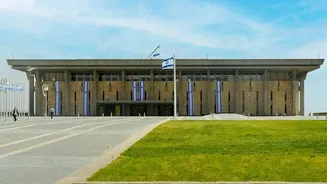
In Israel's parliamentary system, a government needs to command a majority in the 120-seat Knesset. When an election doesn't produce a clear majority for any bloc, or if a government loses a confidence vote, the country enters a transitional phase. The
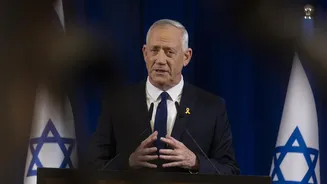
outgoing government doesn't just disappear; it continues to function to prevent a power vacuum. This is what's known as a caretaker or interim government. According to Israel's Basic Law, this government continues to perform its duties until a new one is successfully formed and sworn in. Following the October 27 elections, neither Benjamin Netanyahu’s bloc nor the opposition led by Gadi Eisenkot secured the necessary 61 seats, triggering this exact scenario. President Isaac Herzog has tasked Eisenkot with the difficult job of building a coalition, a process that can take weeks. Until he—or someone else—succeeds, Netanyahu remains in charge.
What Are the Powers of a Caretaker PM?
Here's where it gets complicated. Legally, a caretaker government has the same authority as a regular one; the term 'caretaker' doesn't even appear in the law. It can, in theory, manage state affairs, security, and foreign relations. However, decades of court precedent and legal guidelines have established a principle of 'restraint'. A caretaker government is expected to avoid making irreversible, long-term decisions that could tie the hands of the next administration. This is especially true for major appointments to senior civil service positions. The Supreme Court has ruled that a caretaker government’s decisions are subject to a stricter standard of reasonableness. But there's a significant exception: national security. In the face of a pressing security threat, a caretaker government retains considerable freedom to act, including launching military operations. This means Netanyahu, as caretaker PM, could legally take major security actions.
The Coalition Negotiation Maze
Forming a government in Israel is a complex game of political arithmetic and ideological horse-trading. With the mandate to form a government, Gadi Eisenkot has up to 42 days to assemble a coalition of at least 61 Knesset members. This involves intense negotiations over ministerial posts, policy commitments, and legislative priorities. The current talks are proceeding on multiple tracks. Eisenkot's bloc is negotiating with potential partners, including, reportedly, ultra-Orthodox parties that were previously seen as off-limits. Another possibility is a minority government, which can be formed with fewer than 61 seats if it wins an initial confidence vote because more MKs vote in favor than against, with others abstaining. This path, however, would leave a new government highly vulnerable and unstable.
How Netanyahu's Role Influences Talks
Netanyahu's position as caretaker PM is a major factor in the coalition drama. While he lacks a fresh mandate, he retains the power and platform of the premiership. This allows him to dominate the news cycle and set the national security agenda, advantages he wouldn't have as a regular member of the opposition. Some analysts suggest this position allows him to undermine his opponents' efforts to form a government. His Likud party has also been in talks with Eisenkot's party about a potential national unity government, though Eisenkot has publicly drawn a red line against serving under Netanyahu. These parallel talks create a complex dynamic: every move Eisenkot makes to court a new partner is weighed against the possibility of a deal with Likud, keeping all players on their toes and making the final outcome deeply uncertain.