





The Anatomy of a Seated Spine
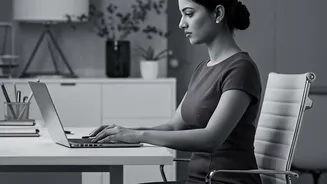
Our bodies are built for movement, not for remaining static in a chair for eight hours a day. When you sit, especially with poor posture, you put immense strain on your spine. The pressure on your spinal discs can increase significantly compared to when
you are standing. This constant compression can reduce blood flow and accelerate wear and tear. Over time, this contributes to stiffness and discomfort. Furthermore, prolonged sitting often leads to slouching, which causes the lower back to lose its natural curve and the head to push forward. This forward head posture forces the muscles in your neck and upper back to work overtime to support the weight of your head, leading to tension and pain.
Muscle Imbalances and Weakness
Sitting doesn’t just affect your bones; it dramatically impacts your muscles. When you're seated, your hip flexor muscles are in a shortened, tight position, while your gluteal muscles are inactive and stretched. This common imbalance can cause the pelvis to tilt forward, increasing the strain on your lower back. Simultaneously, the core muscles that are crucial for stabilizing your spine become underused and weak. Without strong, active support from your core and glutes, your spine is left vulnerable and has to bear loads it isn't designed to handle alone, which is a common pathway to chronic lower back pain.
The Solution: Consistent Micro-Movements
It may seem like a vigorous gym session after work is the only way to undo the damage of sitting, but research shows that frequent, small movements throughout the day are incredibly effective. These "micro-movements" or "micro-breaks" break the cycle of prolonged stillness, improve circulation, reduce muscle stiffness, and reset your posture. The goal isn't to break a sweat, but to consistently reintroduce movement to keep your joints lubricated and your muscles active. Taking even a few minutes every hour to stand, stretch, or perform a simple mobility drill can make a significant difference in how you feel at the end of the day.
Desk Exercise 1: Seated Cat-Cow
This classic yoga pose can be easily adapted for your office chair to promote spinal flexibility. Sit at the edge of your chair with both feet flat on the floor and hands on your knees. As you inhale, arch your back, push your chest forward, and look up slightly (Cow). As you exhale, round your spine, tuck your chin to your chest, and gently pull your belly button in (Cat). Repeat this fluid movement for 5-10 repetitions to gently wake up your spine and relieve tension.
Desk Exercise 2: Thoracic Spine Rotations
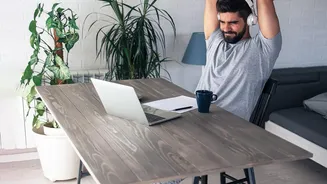
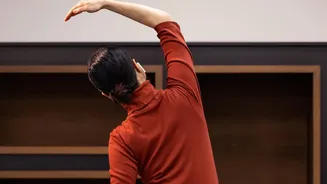
This exercise targets the mid-back (thoracic spine), an area that often becomes stiff from slouching. While sitting tall, place your right hand behind your head. Gently rotate your torso to the right, trying to point your elbow toward the ceiling. Don't force the movement; just go to a comfortable range of motion. Return to the starting position and repeat 10 times before switching to the left side. This helps improve rotational mobility and counteracts a hunched posture.
Desk Exercise 3: Shoulder Blade Squeezes
To combat rounded shoulders, this simple move strengthens the muscles of your upper back. Sit or stand up straight with your arms relaxed at your sides. Gently squeeze your shoulder blades together, as if you are trying to hold a pencil between them. Hold the squeeze for five seconds, making sure not to shrug your shoulders up toward your ears, then release. Repeat this 10-15 times to help pull your shoulders back into a better alignment and stretch tight chest muscles.
Desk Exercise 4: Glute Squeezes and Chair Squats
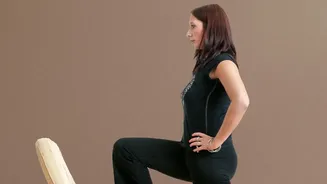
It's vital to reactivate the gluteal muscles that go dormant while sitting. You can do this discreetly by simply squeezing your glutes tightly while seated. Hold for 5-10 seconds and release. For a more active option, perform chair squats. Stand up from your chair, then lower yourself back down until you barely touch the seat, and immediately stand back up. Repeating this 10 times gets blood flowing to your legs and reminds your largest muscles how to work.