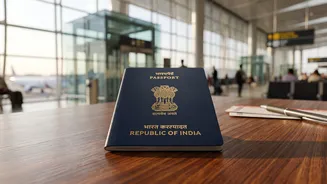




India has significantly streamlined its visa application process, a move designed to make visiting the country easier for tourists, business travellers, students, and more. The complex web of over 22 categories has been consolidated into a clearer framework
of just nine.
A Simplified Framework
In a major overhaul announced by the Ministry of Home Affairs, the Indian government has restructured its entire visa regime to enhance clarity and efficiency. The previous system, which had expanded over time to include 22 main categories and over 60 sub-categories, often caused confusion for applicants trying to determine the correct visa for their trip. This initial number was first reduced to 13 in October 2025 before the most recent simplification brought the total down to nine main categories with 23 sub-categories. The government stated the goal is to make the visa framework more compact, coherent, and responsive to the needs of foreign nationals. As part of this simplification, the application forms themselves have been shortened, with the number of required fields reduced by as much as 65-70%.
Why the Change Was Made
The primary driver behind this reform is to make India a more accessible and attractive destination for legitimate travel, whether for business, tourism, education, or medical purposes. Officials noted that the previous structure had overlapping and sometimes ambiguous categories, making it difficult for applicants to select the appropriate one. This simplification aims to eliminate that confusion. By studying the visa systems of developed countries and global standards, the government sought to create a more user-friendly process. This initiative aligns with broader national campaigns such as 'Heal in India' and 'Study in India', which aim to promote the country as a global hub for medical tourism and education. Ultimately, the change is designed to improve administrative efficiency, allowing officials to focus more on the scrutiny and processing of applications rather than navigating a convoluted system.
The Nine New Visa Categories
The revised framework organises all travel purposes under nine distinct main visa types. According to the Ministry of Home Affairs, these categories are: Business Visa, Diplomatic Visa, Work Visa, Journalist Visa, Medical Visa, Official Visa, Student Visa, Visitor Visa, and Miscellaneous Visa. Many of the old visa types have been consolidated under these broader headings. For instance, the Student Visa is now divided into two sub-categories: S-1 for school and university education and S-2 for research, PhDs, and internships. Similarly, the Business Visa is split into B-1 for long-term ventures and B-2 for shortterm, contract-based activities. The implementation of these new categories is underway, with the government's IT systems being updated to reflect the changes.
Introducing the 'Visitor Visa'
One of the most significant changes is the rebranding of the 'Tourist Visa' to the more encompassing 'Visitor Visa'. This reflects a wider array of permitted activities beyond traditional tourism. The new Visitor Visa is divided into two subcategories. The V_1 visa is designed for shortterm visits of up to 30 days with multiple entries and covers activities like wellness retreats, short business meetings, medical consultations, and brief courses in arts or music. The V_2 visa caters to longer stays, with validity options of one, five, or ten years, and includes all activities under V_1 plus pursuits like mountaineering. This change provides travellers with greater flexibility, allowing them to combine leisure with other shortterm activities under a single, straightforward visa.
What This Means for Applicants
For anyone planning a trip to India , this reform is welcome news . The simplified structure means less guesswork and a more intuitive application process . With fewer categories to choose from and significantly shorter forms to fill out , applicants can expect to save time and effort . The e_visa facility , currently available to nationals of 172 countries , will also be aligned with this new framework . The Ministry of Home Affairs is in the process of updating its IT systems , with the goal of issuing visas under the new , rationalised system by the end of 2026 . This move is expected to not only streamline the experience for individual travellers but also enhance India’s appeal for international investment , academic collaboration , and tourism .