



An Unexpected Discovery in the Asteroid Belt
In the main asteroid belt, a region between Mars and Jupiter, most objects are inert chunks of rock and metal. That's what astronomers thought about asteroid (248370) 2005 QN173 when it was first discovered in 2005. For years, it orbited the Sun like
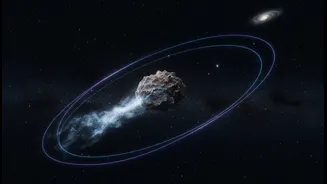
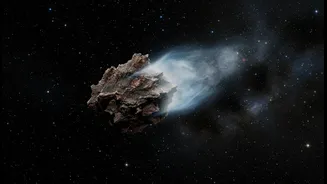
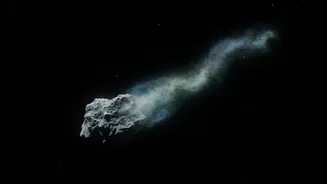
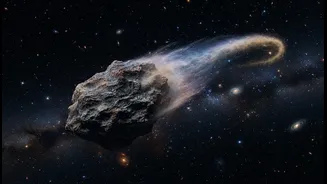
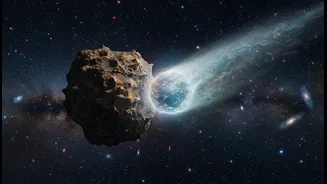
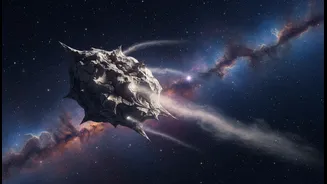
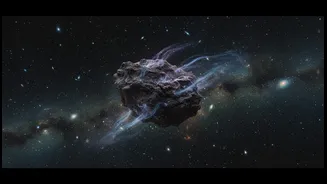
any other of its rocky neighbours. But in July 2021, observations from the Asteroid Terrestrial-impact Last Alert System (ATLAS) survey revealed a stunning surprise: the supposedly dormant asteroid had sprouted a long, faint tail of dust. This discovery transformed it from a simple space rock into a fascinating scientific puzzle, prompting astronomers to re-examine what they thought they knew about it.
The Clues in the Dust and Orbit
This newfound activity gave scientists a wealth of data to analyse. The tail, stretching over 720,000 kilometres long but incredibly faint, acted like a breadcrumb trail. By studying its shape, brightness, and the size of the dust particles, researchers could work backward to understand the forces acting on the asteroid. The dust itself was moving very slowly, at about one metre per second, suggesting a gentle release rather than a violent impact. Combined with a detailed analysis of the asteroid's 5.36-year orbit, which brings it closer to the Sun at certain points, a compelling picture began to emerge. This process of using follow-up imaging and orbital forensics is crucial for understanding these rare active bodies.
A Comet in Disguise?
The leading theory for 2005 QN173's activity is the sublimation of ice. This is the process where ice turns directly into gas when warmed, bypassing a liquid state. This gas, escaping from the surface, would drag dust particles along with it, creating the observed tail. This makes 2005 QN173 a member of a rare and enigmatic class of objects known as 'active asteroids' or 'main-belt comets'. These are objects with the orbits of asteroids but the physical characteristics of comets. Looking back at archival images, scientists found that the asteroid was also active during its previous close approach to the Sun in 2016, confirming the activity is a recurring phenomenon linked to its orbit.
Why These 'Active Asteroids' Matter
The discovery of objects like 2005 QN173 is more than just a cosmic curiosity. There are fewer than 50 known active asteroids, and they challenge the traditional, clear-cut distinction between rocky asteroids and icy comets. These hybrid objects could hold important clues about the history of our solar system. One significant hypothesis is that main-belt comets, originating in the warmer inner solar system, could have been a primary source of Earth's water. The chemical composition of their ice might be a better match for our oceans than that of comets from the colder, outer solar system. Studying them helps piece together the puzzle of how our own planet became a water-rich world capable of supporting life.