





The Dawn of the Small Sat
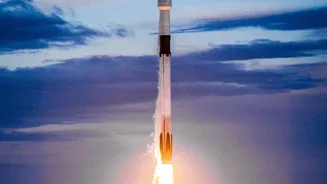
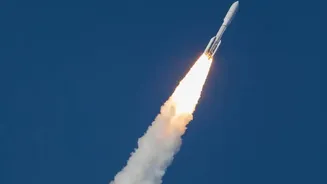
Forget the car-sized satellites of the past, which took years and enormous budgets to build and launch. The new kids on the block are Nanosatellites and CubeSats—miniature, modular, and remarkably powerful satellites. Enabled by the same miniaturization
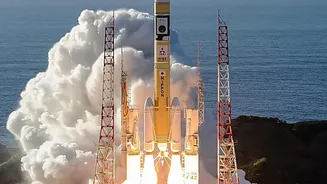
that put a supercomputer in your pocket, these small spacecraft are being developed and launched faster and cheaper than ever before. This has democratized access to space, allowing universities, startups, and emerging nations like India to participate in what was once the exclusive domain of global superpowers. Organizations like ISRO are leveraging this trend, developing vehicles like the Small Satellite Launch Vehicle (SSLV) to specifically cater to this booming market.
Our Planet's New Watchdogs
One of the most significant impacts of these tiny orbiters is in monitoring the health of our planet. Constellations of small satellites can provide high-resolution, frequent imagery of Earth, giving scientists unprecedented insight into climate change. NASA's PREFIRE mission, for instance, uses a pair of CubeSats to measure heat radiating from the Arctic and Antarctic, data that is crucial for understanding sea ice loss and rising sea levels. Other missions focus on tracking greenhouse gas emissions from specific sites, helping to pinpoint major sources of carbon dioxide and methane. They can also monitor deforestation, water quality in lakes and rivers, and the health of vital ecosystems with a persistence that was previously impossible.
First Responders in Orbit
When disaster strikes, information is the most critical resource. Small satellites are becoming invaluable tools for disaster management. Working as a coordinated group, or constellation, they can provide near real-time imagery of areas affected by floods, wildfires, and earthquakes. This allows emergency responders to quickly assess the extent of the damage, identify safe evacuation routes, and allocate resources more effectively. In the aftermath of a major event that cripples ground communication, these satellite networks can also provide a vital link for coordination and rescue efforts, ultimately helping to save lives.
Smarter Farming from the Sky
Small satellites are driving a revolution in agriculture, enabling what is known as precision farming. By providing detailed data on soil moisture, crop health, and nutrient levels, they help farmers make smarter decisions. A farmer can know precisely which parts of their field need more water or fertilizer, reducing waste, saving money, and lessening the environmental impact. Initiatives like EOS SAT, the world's first agri-focused satellite constellation, aim to provide farmers with actionable insights to increase yields and promote food security in the face of a changing climate. For vast agricultural nations like India, this technology holds the promise of making farming more sustainable and productive.
Connecting Every Corner of the Globe
The digital divide remains a major global challenge, with billions still lacking reliable internet access. Large constellations of small satellites, operating in low Earth orbit, are designed to solve this very problem. Because they orbit much closer to Earth than traditional geostationary satellites, they can provide high-speed, low-latency internet to remote villages, ships at sea, and underserved urban areas. This connectivity enables access to education, telemedicine, and online commerce, creating opportunities that were previously out of reach and helping to bridge the gap of digital inequality.