







The Urban Gardener's Dilemma
Overwatering is one of the most common and fatal mistakes in gardening, especially for plants in containers. Unlike garden beds, pots have limited drainage, and excess water can quickly fill air pockets in the soil, suffocating the roots. Without oxygen,
roots can't absorb nutrients and begin to rot. The irony is that the symptoms of overwatering—wilting, yellowing leaves, and leaf drop—often look just like the signs of a thirsty plant, leading well-intentioned gardeners to add even more water. In India, this problem is amplified by climatic swings, from scorching summer heat that tempts you to water constantly to monsoon downpours that can flood pots in an instant.
A Smart Solution Takes Root
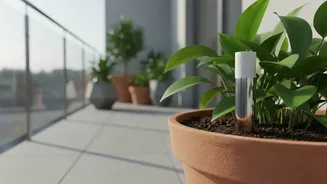
Enter the smart soil probe, a small but powerful gadget that acts as a translator for your plants. These Internet of Things (IoT) devices are designed to give you a clear, data-driven picture of what’s happening beneath the soil's surface. By simply inserting a probe into a pot, you eliminate the anxious guesswork. Instead of watering on a rigid schedule or relying on a subjective finger test, you can water based on your plant's actual, real-time needs. It's a simple innovation that helps prevent root rot, conserve water, and ultimately, grow healthier, more resilient plants in small urban spaces.
How These Probes Work
Despite sounding futuristic, the technology is quite straightforward. A typical smart probe has sensors that measure key environmental factors directly at the root level. Most commonly, they use capacitive or resistive methods to measure the soil's electrical properties, which change based on water content. This data, along with readings for light exposure, temperature, and sometimes even soil nutrient levels, is transmitted wirelessly via Bluetooth or Wi-Fi to an app on your smartphone. This allows you to check on your plants from anywhere and receive alerts when conditions fall out of the optimal range for that specific plant.
Benefits Beyond Just Watering
While preventing overwatering is their main draw, many smart sensors offer a more holistic view of plant health. By tracking ambient light, they can help you determine if your balcony is providing too much or too little sun for a particular species. Temperature monitoring is crucial for protecting sensitive plants from sudden heatwaves or cool snaps. Some advanced sensors even measure soil salinity or nutrient levels, giving you a heads-up when it might be time to fertilize. Many companion apps come with vast databases, allowing you to select your plant species and get tailored advice on its ideal conditions for moisture, light, and food.
Choosing Your Digital Green Thumb
When selecting a smart probe, consider a few key factors. First, decide what you want to measure: basic moisture or a full suite of data including light, temperature, and fertility. Second, consider connectivity. Bluetooth-only sensors are typically more affordable and have longer battery life but require you to be near the plant to sync data. Wi-Fi enabled sensors (often via a hub) let you monitor your plants remotely, which is ideal for frequent travellers. Also look at probe length to ensure it’s suitable for your pot size, the quality of the companion app, and battery life, as some can last up to a year on a single battery.
Are They Worth the Investment?
For the casual plant owner with one or two hardy plants, a smart probe might be overkill. However, for those with a growing collection, for enthusiasts who love data, or for anyone who has struggled with the heartbreak of losing plants, they can be a game-changer. Prices for entry-level sensors are quite accessible, often costing less than a new, mature plant. When you weigh the cost against the money saved on replacing dead plants and the water conserved through more efficient practices, the investment can pay for itself. More importantly, these tools can teach you to be a better gardener by revealing the subtle needs of your plants.