




A Strategic Handshake in Orbit
The collaboration in space between India and the United States is deeper and more strategic than ever. What began as intermittent cooperation has blossomed into a comprehensive partnership covering civil, commercial, and security aspects of space. This
acceleration is driven by shared democratic values, a mutual interest in a rules-based order for outer space, and a desire to counterbalance other global powers. Recent high-level meetings have consistently placed space cooperation at the forefront, framing it as a critical component of the overall bilateral relationship. Initiatives like the U.S.-India initiative on Critical and Emerging Technology (iCET), and its successor TRUST (Transforming the Relationship Utilizing Strategic Technology), have created a formal framework for this partnership. These platforms facilitate collaboration not just between space agencies NASA and ISRO, but also across private industries and academic institutions, ensuring a multi-faceted approach to innovation and development.
NISAR: A Landmark Mission Watching Over Earth
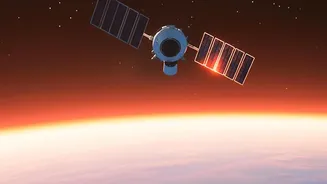
The most visible symbol of this partnership is the NASA-ISRO Synthetic Aperture Radar (NISAR) mission, launched in July 2025. As the first satellite hardware jointly developed by the two agencies, NISAR is the world's most expensive Earth-imaging satellite, with a total cost of around $1.5 billion. The spacecraft features two radar systems: an L-band radar provided by NASA and an S-band radar from ISRO. This dual-frequency capability allows NISAR to observe changes on the Earth's surface with unprecedented detail, penetrating clouds and operating day or night. It will scan nearly all of our planet's land and ice surfaces every 12 days, providing a massive trove of open-source data. This data is invaluable for managing agricultural resources, monitoring natural hazards like earthquakes and landslides, tracking the melt of glaciers and ice sheets, and understanding the dynamics of climate change.
The Artemis Accords and a Return to the Moon
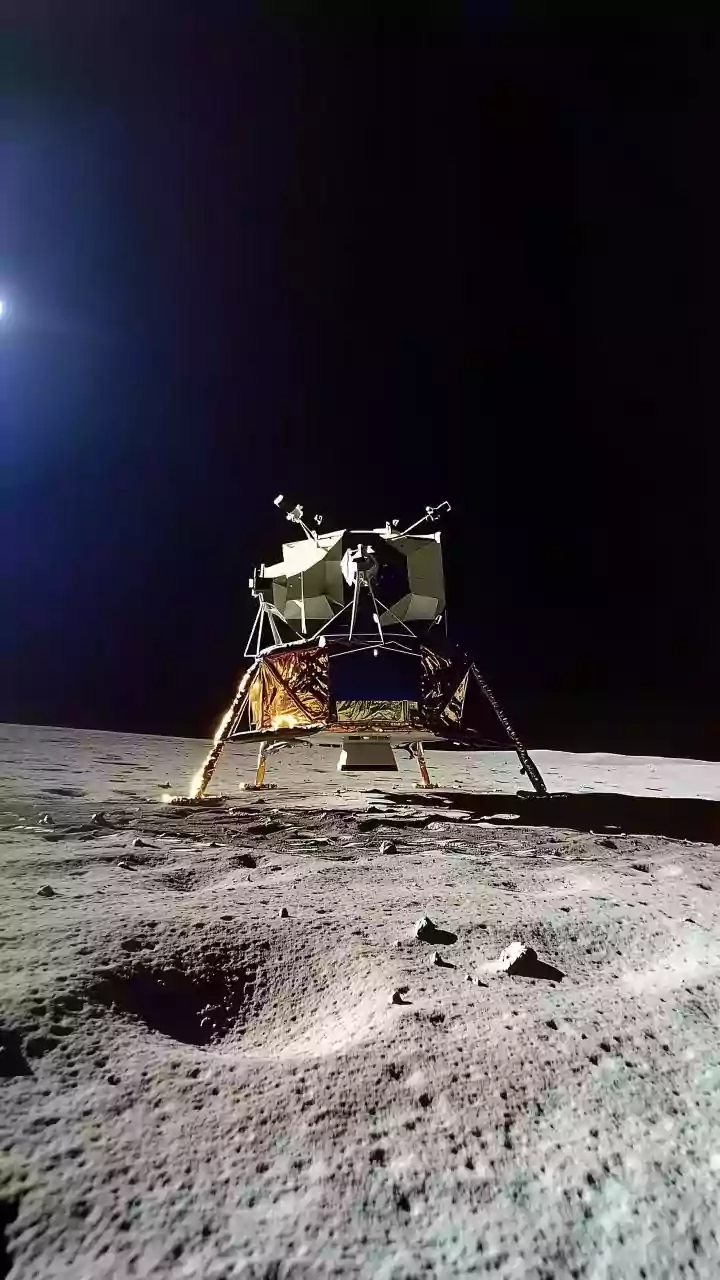
India's decision to join the U.S.-led Artemis Accords in 2023 was a pivotal moment, signaling a shift towards collaborative international space exploration. The Accords establish a set of principles for safe, transparent, and sustainable activity on the Moon and beyond. By signing, India aligned itself with a growing global coalition and ensured its future space endeavors are compatible with international standards. This partnership is already bearing fruit. Building on the successful cooperation with NISAR, NASA has formally invited ISRO to participate in its Moon Base program, a key part of the plan for a permanent human presence near the lunar south pole. This collaboration could see ISRO contributing technologies in robotics, navigation, and other critical infrastructure, leveraging its own experience from the Chandrayaan missions.
Human Spaceflight and the ISS
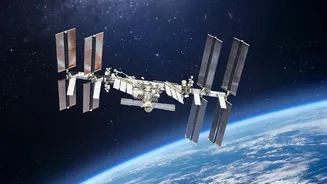
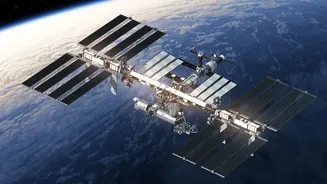
The cooperation is also extending into the domain of human spaceflight. As part of the deepening partnership, NASA and ISRO are working on a joint mission to the International Space Station (ISS). This historic collaboration will involve ISRO astronauts receiving advanced training at NASA's Johnson Space Center in Houston. The mission, facilitated by commercial provider Axiom Space, marks a significant milestone that will provide invaluable experience for India's own ambitious Gaganyaan human spaceflight program. The knowledge gained from long-duration missions and ISS operational protocols will directly feed into India's long-term goals of sustaining human presence in space.
Fueling Commercial Space Industries
Beyond government agencies, the India-U.S. partnership is actively fostering a vibrant commercial space ecosystem. The iCET and TRUST frameworks explicitly aim to remove regulatory barriers and connect the innovation hubs of both nations. This has led to dedicated trade missions, with leading American space companies like SpaceX, Blue Origin, and others visiting India to explore business-to-business partnerships. These forums focus on key areas like market access, foreign direct investment, and export controls. The goal is to integrate Indian startups and established private players into the global supply chain, creating opportunities in everything from satellite manufacturing and launch services to data analytics and space tourism, boosting the space economy in both countries.