







The Current, Sad State of Affairs
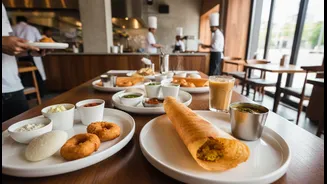
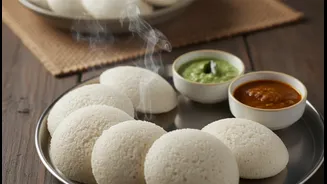
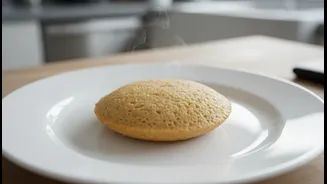
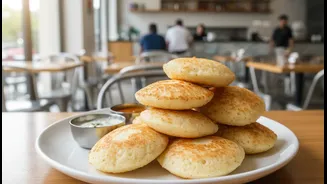
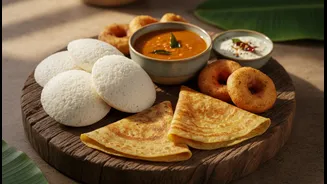
Walk into almost any major QSR in India offering a South Indian breakfast and you’re likely to encounter a familiar, disheartening scene. The idlis have a tell-tale rubbery bounce from being microwaved. The vadas are often dense and lukewarm. The dosa,
a dish defined by its fresh, crisp texture, is frequently a pale, sad imitation made from a pre-mix that lacks the subtle, fermented tang of the real thing. Sambar comes from a one-size-fits-all concentrate, and chutneys are bland, uniform pastes. This isn't just a slight miss; it's a fundamental misunderstanding of the cuisine. Chains built on the promise of speed and consistency have sacrificed the very soul of the food they are trying to serve. For a nation where breakfast is an increasingly important dining-out occasion, this represents a major failure of imagination and execution.
More Than Just Morning Fuel
To understand the failure, operators must first understand the culture. South Indian breakfast isn't merely a collection of dishes; it's a ritual built on freshness. The entire process, from grinding the batter to the sizzle of the tadka in the chutney, is about creating vibrant, distinct flavours. It’s a meal that is light yet satisfying, complex yet clean. Iconic local spots, from Brahmin's Coffee Bar in Bengaluru to Saravana Bhavan globally, are not just restaurants; they are institutions built on this principle. They prove that customers will queue and pay for quality. By reducing these dishes to convenience products, QSRs ignore the core value proposition: authenticity and the sensory experience. Consumers visit QSRs for a quick meal, but their perception of the brand is built on factors like quality, taste, and cleanliness.
The Billion-Rupee Breakfast Opportunity
The Indian QSR market is a behemoth, valued at over USD 23 billion in 2023 and growing rapidly. With fast-paced urban lifestyles, the demand for convenient meals, especially breakfast, is skyrocketing. Reports show that breakfast is a prime time for vegetarian orders on delivery platforms, with staples like masala dosa and idli topping the charts nationwide. This isn't a niche market; it's the mainstream. QSRs that continue to serve subpar versions are not just disappointing customers; they are actively ceding ground to a growing number of dedicated South Indian chains and local eateries that are mastering scalable authenticity. The chain that finally cracks the code of a delicious, authentic, and fast South Indian breakfast will unlock immense customer loyalty and a significant revenue stream.
Deconstructing the 'Too Hard' Myth
The common excuse is that authentic South Indian food is too complex for the QSR model. The need for fresh batter, multiple chutneys, and hot, made-to-order items seems to clash with the ethos of speed. This is a failure of innovation, not an insurmountable barrier. The same industry that uses AI for delivery routing and self-ordering kiosks to boost sales can surely solve the challenge of a perfect dosa. Solutions already exist. Centralised commissaries can produce high-quality, fresh batter daily. Modern kitchen technology can automate parts of the process without sacrificing quality. Furthermore, the success of chains like Malgudi and Rameshwaram Cafe, which are scaling up with a focus on premium quality, proves that the operational hurdles are solvable. The challenge isn't the food; it's the mindset.
A Blueprint for the Reset
A successful reset requires a complete change in approach. First, focus. Instead of offering a dozen mediocre items, perfect three or four core dishes. A great idli, a crisp vada, a flavourful dosa, and authentic filter coffee would be a revolutionary menu. Second, invest in the supply chain to ensure freshness, not just shelf-life. This means treating batter like a fresh product, not a long-life concentrate. Third, embrace theatre. As some restaurants have found, preparing food in front of guests builds trust and enhances the experience. A live dosa station, even in a small QSR format, can be a powerful differentiator. Finally, respect the source. Collaborate with experienced chefs and honour traditional recipes. The goal should not be to create a vague, Indian-ised breakfast item but to deliver an authentic taste of South India, quickly and consistently.