








Nature’s Frontline Defence
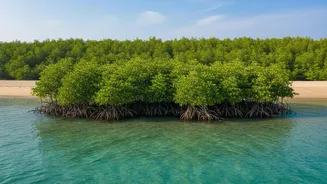
When a cyclone makes landfall, the most destructive force is often the storm surge—a massive wall of water pushed inland by high winds. While concrete sea walls offer protection, nature has a more resilient solution: mangroves. The dense, tangled root
systems of these coastal forests are remarkably effective at absorbing and dissipating wave energy. Studies show that a sufficient width of mangrove forest can significantly reduce the height of a storm surge, with measured reductions ranging from 5 to 50 centimetres for every kilometre of forest. This natural barrier slows the flow of water, acting as a buffer that shields inland areas, prevents coastal erosion, and saves lives. Evidence from past cyclones in India has shown that villages protected by healthy mangrove belts suffered significantly less damage than those left exposed.
Green Shields on the East Coast
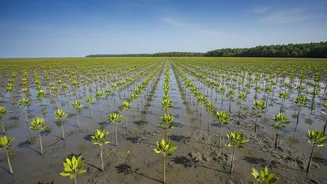
States like Odisha and West Bengal, which bear the brunt of cyclones forming in the Bay of Bengal, have become hubs for mangrove restoration. In Odisha, community-led initiatives in coastal districts like Balasore and Kendrapara are transforming once-barren mudflats into thriving forests. One notable project under the Enhancing Climate Resilience of India's Coastal Communities (ECRICC) initiative, supported by the government, UNDP, and the Green Climate Fund, has restored hundreds of hectares by planting resilient native species. Similarly, in the Sundarbans of West Bengal, large-scale plantation drives, often led by women's self-help groups, are aiming to create a robust 'bioshield' to protect communities and the city of Kolkata. After Cyclone Amphan in 2020, the West Bengal government announced a massive drive to plant millions of mangrove saplings.
More Than Just a Barrier
The benefits of these afforestation projects extend far beyond storm protection. Mangrove forests are biodiversity hotspots, acting as critical nurseries for fish, crabs, and shrimp, which sustains local fisheries and provides food security. They are also incredibly efficient carbon sinks, capturing and storing up to four times more carbon per hectare than tropical rainforests, making them a powerful tool in the fight against climate change. For local communities, these initiatives bring direct economic benefits. Villagers, particularly women, are finding employment in raising nurseries, planting saplings, and maintaining the restored forests. In some areas, these projects are also creating opportunities for eco-tourism and sustainable livelihoods like beekeeping and crab cultivation, reducing local dependence on forest resources and fostering a sense of ownership.
The Roots of Resilience
The success of these initiatives hinges on community involvement. Local knowledge of tidal patterns, soil conditions, and native species is proving invaluable for ensuring the long-term survival of the planted saplings. In villages like Badakot in Odisha, residents who were displaced by coastal erosion decades ago have successfully created their own 25-acre mangrove forest, a testament to community resilience. Projects led by women, such as the 'Women for Mangroves Initiative' in Puri, are particularly effective, empowering them as key stakeholders in coastal conservation. By placing local communities at the heart of restoration efforts, these programmes ensure that the new forests are not just planted but protected for generations to come.