








Start with Concrete Outcomes
Hiring managers look for results. Your academic career is full of them, even if you don't label them as such. Start by cataloguing the tangible products of your research. This isn't about listing duties; it's about showcasing deliverables. Did you publish
peer-reviewed articles? That's not just writing; it's successfully communicating complex findings to a critical audience. Did you present at national or international conferences? You have experience in public speaking and defending your work before experts. Securing a grant isn't just luck; it's a demonstration of your ability to build a compelling business case and secure funding through a competitive process. Even your dissertation is a key outcome—it's a multi-year project you managed from conception to completion, delivering a comprehensive, book-length final report. Think in terms of finished products: papers, presentations, reports, courses taught, and projects completed.
Inventory Your Transferable Skills
The core of your value outside academia lies in your transferable skills. Many PhDs underestimate this, focusing too much on their niche subject matter. The reality is that your training has equipped you with a powerful toolkit. The key is to reframe it in business terms. Your deep research isn't just 'reading'—it's advanced data analysis, information synthesis, and critical evaluation. Managing your research, often with limited resources and tight deadlines, is project management. If you've taught or mentored junior students, you have leadership, training, and management skills. Other crucial skills you’ve developed include quantitative and qualitative analysis, problem-solving under ambiguity, and exceptional written communication. Make a comprehensive list of these skills, thinking about every task you performed during your research journey.
Frame the Problems You Solved
This is the most critical step and the one most often missed. Industry hires people to solve problems. Your entire PhD was an exercise in solving a very difficult problem that no one had cracked before. You must learn to articulate this. Don't just state your research topic; frame it as a problem and solution. For instance, instead of saying, "My research was on the migratory patterns of X bird," try: "I designed and executed a three-year study to solve the problem of inconsistent data in avian migration, leading to a new predictive model that was 20% more accurate." This approach demonstrates not just what you did, but the impact it had. Businesses are motivated by intellectual challenges and value candidates who can tackle the most complex, ambiguous, and high-stakes problems. Show that you can identify a knowledge gap, devise a rigorous plan to fill it, and deliver a solution.
Translate for Your CV and Interviews
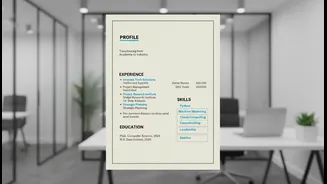
Once you have your lists of outcomes, skills, and problems solved, the final step is to integrate them into your job application materials. Your academic CV is not a resume. It needs a complete overhaul. Convert academic achievements into industry-friendly bullet points. "Conducted independent research on..." becomes "Led a research initiative that delivered data-driven insights into a complex challenge." During interviews, be prepared to move beyond your technical expertise. Employers value teamwork, adaptability, and an understanding of business priorities. Use the STAR method (Situation, Task, Action, Result) to structure your answers, focusing on the real-world impact of your academic projects. Emphasise collaboration, how you've handled feedback, and how your rigorous analytical approach can help a company make better, evidence-based decisions.