

A Constant Tectonic Collision
The primary reason for Nepal's earthquake risk lies deep beneath the earth's surface. The country is situated directly on the boundary where two massive tectonic plates, the Indian and the Eurasian, are colliding. The Indian plate is relentlessly pushing
northward, sliding under the Eurasian plate at a rate of about 4 to 5 centimeters per year. This immense geological pressure doesn't release smoothly. Instead, stress builds up for decades, or even centuries, along fault lines before being released in sudden, violent bursts of energy—earthquakes. This ongoing collision is the very force that created the towering Himalayas over millions of years, and it ensures that seismic activity remains a constant and catastrophic threat. Many of these quakes are shallow, meaning their destructive energy is released closer to the surface, amplifying the shaking and damage to buildings and infrastructure.
The Double-Edged Sword of the Himalayas
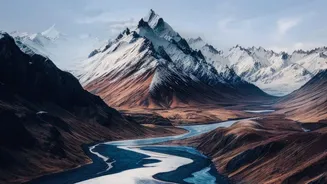
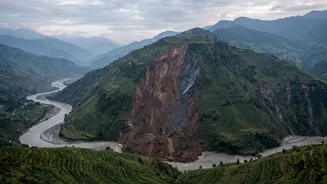
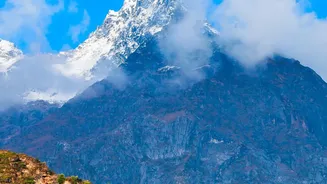
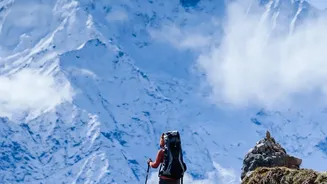
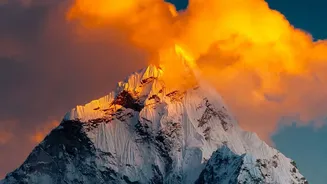
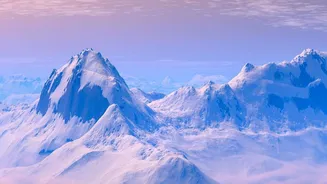
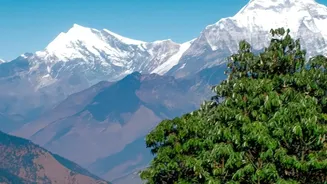
The same mountains that draw tourists from across the globe are also a major source of danger. The Himalayas are geologically young and fragile, with steep, unstable slopes. This dramatic topography, which drops from the world's highest peaks to flat plains in a short distance, creates the perfect conditions for landslides. An earthquake can instantly trigger thousands of them, as seen during the 2015 Gorkha earthquake. But tremors aren't the only trigger. The annual monsoon provides the other key ingredient. When intense rain saturates the fragile soil on these steep hillsides, the ground can give way without warning, sending torrents of mud, rock, and debris crashing down into the valleys below. Haphazard road construction, which often cuts into these unstable slopes, further increases the frequency and severity of these deadly events.
When the Monsoon Arrives
For four months every year, from roughly June to September, the monsoon season drenches Nepal, delivering about 80% of its total annual rainfall. While vital for agriculture, these torrential downpours regularly overwhelm rivers and saturate the landscape, leading to widespread flooding and landslides. The country's topography means that water rushes down from the mountains with incredible force, causing flash floods in the hills and widespread inundation in the flat southern plains known as the Terai. This predictable yet destructive cycle claims lives and destroys property annually. Climate change is making this worse, with rainfall patterns becoming more erratic and intense, leading to more extreme flood events than in the past.
Climate Change and Melting Glaciers
A newer, and increasingly alarming, threat is the rapid melting of Nepal's thousands of glaciers. As global temperatures rise, glaciers are retreating at an accelerated pace, forming vast lakes of meltwater contained only by unstable natural dams of rock and ice debris. These are known as Glacial Lake Outburst Floods (GLOFs). An earthquake, a major landslide, or even just the mounting pressure of the water itself can cause these natural dams to burst. This unleashes a sudden, catastrophic wall of water downstream, destroying everything in its path. There have been more than two dozen such events recorded in Nepal since the 1970s, and with at least 47 glacial lakes now considered potentially dangerous, the risk is growing.
Human Factors That Amplify Risk
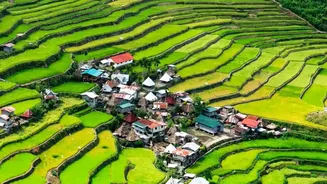
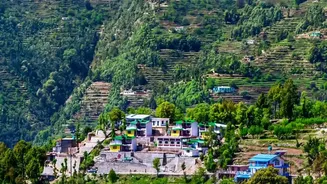
Natural hazards only become disasters when they impact people and property. In Nepal, socio-economic factors significantly heighten the country's vulnerability. As a low-income nation, many people live in homes not built to withstand earthquakes, often situated in high-risk areas like riverbanks or steep slopes out of necessity. Rapid, unplanned urbanization in places like the Kathmandu Valley means more people are concentrated in vulnerable areas. Furthermore, factors like deforestation for agriculture and fuel contribute to soil erosion, making slopes even more prone to landslides. These human elements combine with the natural hazards to create a cycle of devastation that is difficult to break.