







A Dry Start Increases the Stakes
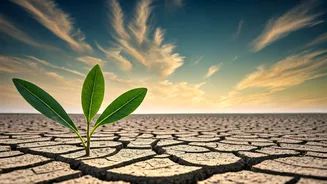
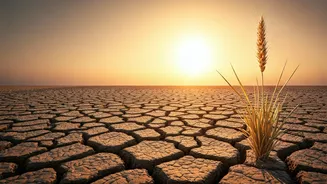
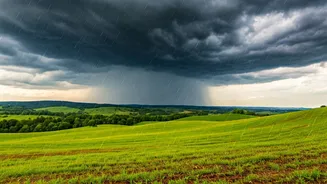
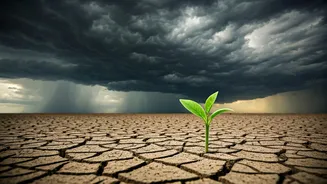
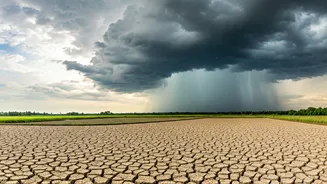
The anticipation for July's rainfall is heightened by a notably dry June. The country ended the first monsoon month with a significant rainfall deficit, making it one of the driest Junes in over a century. This sluggish start, attributed partly to strengthening
El Niño conditions, has delayed the sowing of crucial summer crops and raised concerns among agricultural communities. Experts at the India Meteorological Department (IMD) have noted the lack of low-pressure systems that typically drive June rains, putting even more pressure on July to deliver.
The Forecast for July
In its latest outlook, the IMD has forecast that rainfall for July is likely to be below normal for the country as a whole. The national average is expected to be less than 94% of the Long Period Average (LPA), which for July is about 280.4 mm. This outlook is influenced by weak El Niño conditions over the Pacific Ocean, which are expected to strengthen and can suppress monsoon rainfall over India. However, the forecast isn't uniform. While most parts of central and western India may see subdued rainfall, some areas in northwest, northeast, and east-central India are predicted to receive normal to above-normal showers, creating a complex and varied national picture.
Why July is the Make-or-Break Month
July is arguably the most critical month of the four-month monsoon season. It traditionally accounts for about a third of the total seasonal rainfall and is vital for the sowing and growth of Kharif crops like rice, cotton, soybean, and maize. Over half of India's farmland is rain-fed, making timely and well-distributed July showers essential for soil moisture and seed germination. A poor performance in July is difficult to recover from, even if August and September bring heavier rains. The success of this single month has a direct impact on agricultural output, rural incomes, and food inflation.
Impact Beyond the Farm
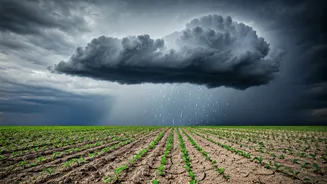
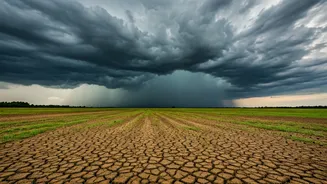
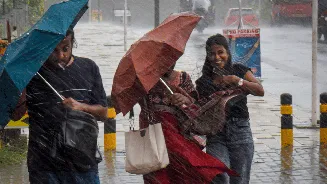
The monsoon's influence extends far beyond agriculture. These rains are the primary source for replenishing India's water reservoirs, which are critical for drinking water supply, industrial use, and hydroelectric power generation throughout the year. A deficit in July can put immense pressure on water management systems in both urban and rural areas. Conversely, while rain is needed, the pattern of rainfall is just as important. Intense, short bursts of rain in concentrated areas can lead to flash floods and landslides, as has already been witnessed in parts of the Northeast, while other regions remain parched. This is why experts are watching the distribution, not just the total volume, so closely.
A Nation Watching and Waiting
While the overall monthly forecast suggests a deficit, meteorologists expect a helpful spell of rain in the first week to ten days of July, which could provide a much-needed boost for sowing activities. The monsoon has also begun advancing into remaining parts of North India, including Delhi, after a delay. However, the outlook for the latter half of the month is less certain. The interplay between the strengthening El Niño and other atmospheric factors like the Indian Ocean Dipole (IOD), which is currently neutral, will be monitored closely. These global patterns hold the key to how the rest of the season will unfold.