





More Than Just A Slippery Surface
To the uninitiated, the problem with rain and climbing seems obvious: water makes rock slippery. While true, this is a dangerous oversimplification. The real challenge is a compound crisis that attacks a climber’s technique, their gear, and even the structural
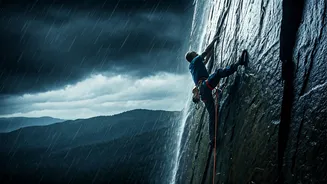
integrity of the wall itself. A light drizzle can quickly escalate into a serious situation, turning a recreational outing into a lesson in risk management. Experienced climbers know that rain doesn't just add difficulty; it changes the fundamental rules of the game. Every movement becomes more deliberate, every piece of gear placement is questioned, and the mental fortitude required to stay calm and make good decisions is tested to its absolute limit.
When Rock Turns To Glass Or Mush
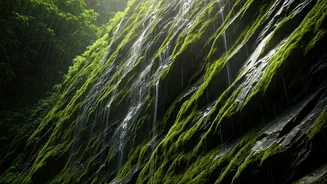
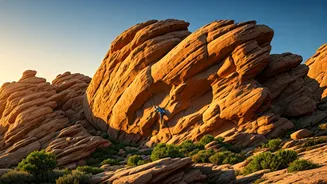
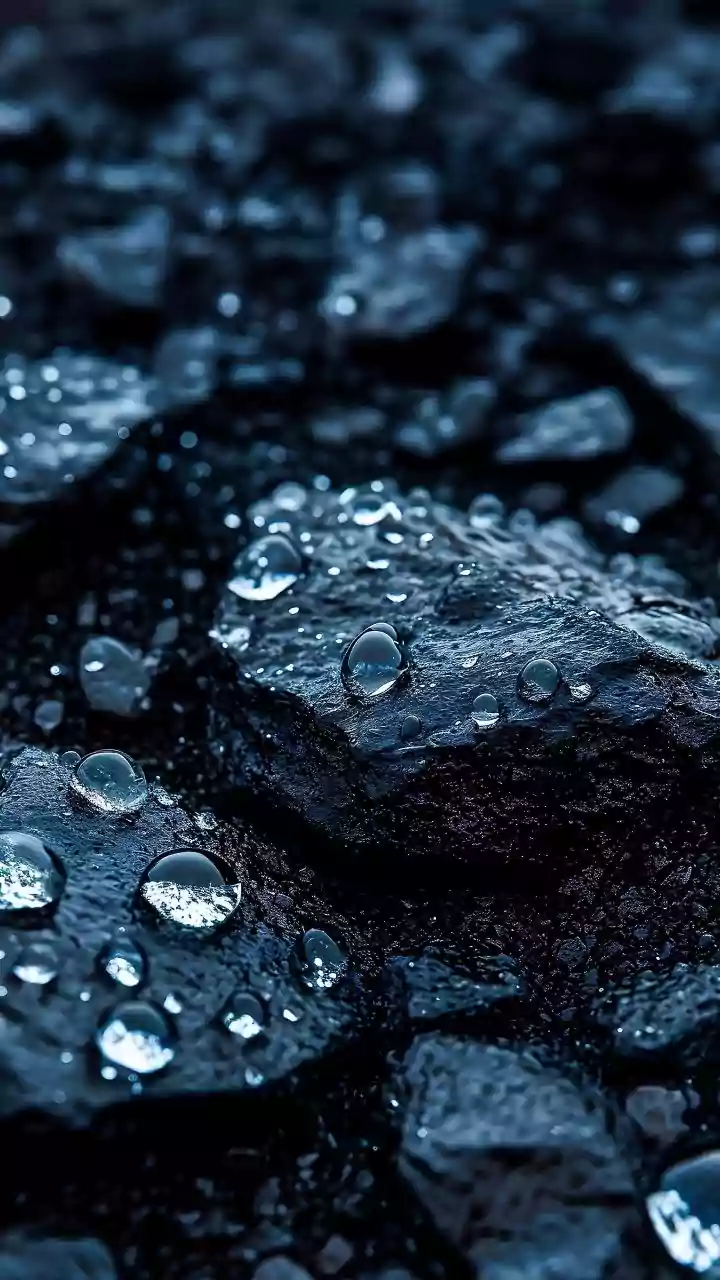
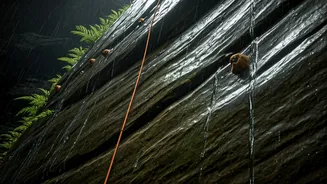
Not all rock is created equal, especially when wet. Granite and other non-porous rocks like quartzite become incredibly slick, like climbing on wet glass. The tiny crystals and edges that provide crucial friction for hands and shoes simply disappear under a film of water. Every foothold and handhold becomes treacherous and unreliable. Even more dangerous is the effect of water on porous rock like sandstone. Popular in climbing areas across India and the world, sandstone acts like a sponge. When saturated, it loses its structural integrity. Holds that were solid moments before can crumble or break off entirely under a climber's weight. Pulling on a wet sandstone hold is a gamble that can lead to a catastrophic gear or hold failure. This is why many climbing communities enforce a strict rule: do not climb on sandstone for at least 24-48 hours after significant rainfall. The risk is not just to the climber, but to the rock face itself, as climbing on it can cause permanent damage.
Your Gear's Worst Enemy
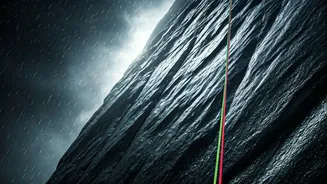
A climber's life depends on their gear, and rain compromises nearly every part of it. The most immediate casualty is chalk. Used to keep hands dry and improve grip, chalk becomes a slimy, useless paste the moment it gets wet. Suddenly, a climber’s most basic tool for friction is gone. The rope, your literal lifeline, is also severely affected. When a modern dynamic climbing rope gets wet, it becomes heavier and harder to handle. More critically, it loses some of its dynamic properties—the stretch that absorbs the force of a fall. A wet rope becomes more static, meaning a fall will impart a greater shock load on both the climber and the gear placed in the rock. Studies by gear manufacturers have shown that a wet rope can be up to 30% weaker when tested for abrasion resistance. Metal gear like carabiners and protection devices become slippery and difficult to operate with cold, wet hands, increasing the risk of fumbling and dropping a crucial piece of equipment.
The Mental Game of a Downpour
Beyond the physical and equipment challenges lies the immense psychological pressure. Climbing requires intense focus, and rain is a powerful distraction. The physical discomfort of being cold and soaked can quickly lead to poor decision-making. Shivering hands lose dexterity, making it harder to place gear securely or grip holds. The fear factor is amplified; a slip that would be trivial on a dry day feels far more consequential when every surface is slick. The climber must fight the urge to rush while also recognizing the urgency of getting to safety. This mental battle—staying calm enough to execute a safe retreat (or, in rare cases, to continue) while your body is telling you to panic—is often the hardest part of climbing in the rain.