






Your Pre-Monsoon Vehicle Health Check
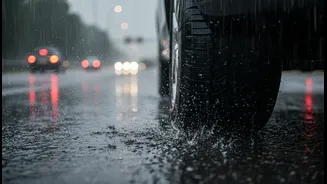
Before the downpours become a daily affair, a thorough vehicle inspection is non-negotiable. Your tyres are the first line of defence against slippery roads. Ensure they have adequate tread depth, ideally above 3mm, to effectively channel water away and
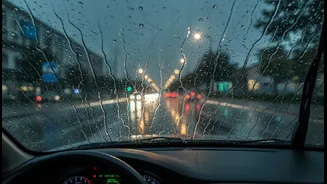
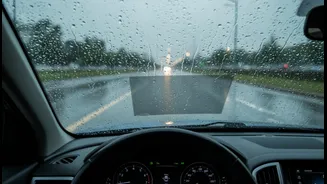
prevent skidding. Worn-out tyres are a major risk for hydroplaning. Equally crucial are your brakes. Wet conditions can reduce their effectiveness, so if you hear any squeaking or feel a spongy brake pedal, get them inspected immediately. Clear vision is paramount. Replace old or streaky wiper blades, as they are your primary tool against heavy rain. Top up your windshield washer fluid to clear away mud and grime splashed by other vehicles. Finally, do a walk-around to check that all your lights—headlights, taillights, and indicators—are clean and functional. They are essential for both seeing and being seen.
Mastering Wet-Road Driving Techniques
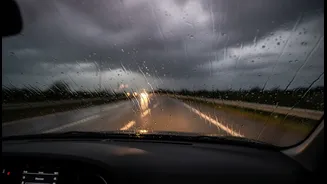
Once you are on the road, adjusting your driving style is key. The most important rule is to slow down. Wet roads significantly reduce tyre grip, meaning your braking distance increases. A good rule of thumb is to reduce your speed by about a third of what you would normally drive. Disengage cruise control to ensure you are in complete command of the vehicle. Maintain a safe following distance from the vehicle in front, at least three to four seconds, to give yourself ample time to react. Painted road markings, like zebra crossings, become incredibly slippery when wet, so avoid braking hard on them. One common mistake is using hazard lights while driving in heavy rain. This can confuse other drivers. Instead, use your low-beam headlights to improve your visibility to others without causing glare.
The Peril of Waterlogged Roads
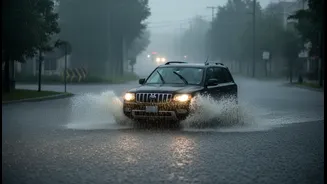
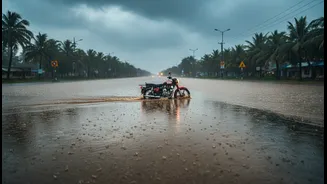
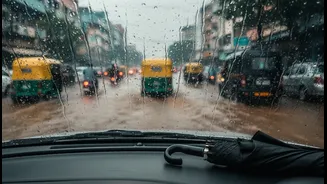
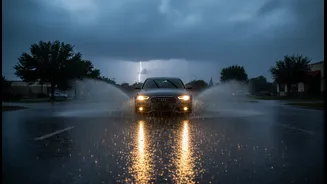
Driving through standing water is one of the biggest risks during the monsoon. If you can, avoid it entirely. Puddles can hide deep potholes or debris that could damage your car. If you must cross a waterlogged patch, first try to assess its depth; a safe limit is generally no higher than the bottom of your car's bumper. If you decide it's safe, engage a low gear and keep your engine's RPMs steady and slightly higher than normal to prevent water from entering the exhaust pipe. Drive through slowly and steadily, at about 3-4 mph, to create a small 'bow wave' in front of your car, which helps to keep water away from the engine's air intake. Do not restart your car if it stalls in water. Trying to do so can cause water to be sucked into the engine, leading to catastrophic damage known as hydrostatic lock. It's safer to abandon the vehicle and get to higher ground.
When Your Car Starts to Hydroplane
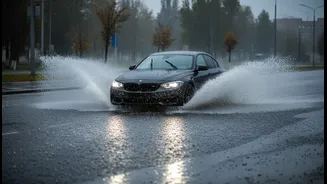
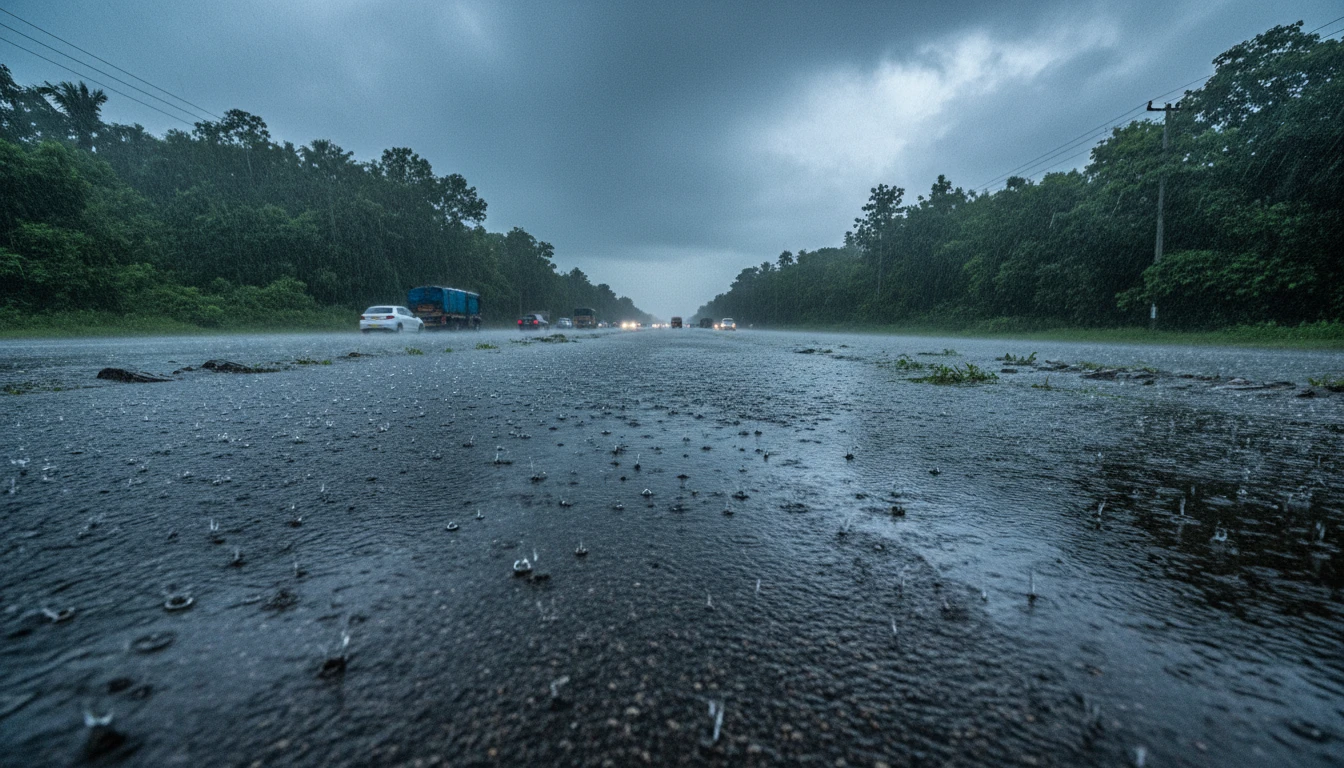
Hydroplaning is the frightening sensation of your car's tyres losing contact with the road and gliding on a layer of water. It can happen at speeds as low as 50 kmph in heavy rain. If you feel the steering become light and unresponsive, your car may be hydroplaning. The key is not to panic. Do not slam on the brakes or make sharp turns. Instead, gently ease your foot off the accelerator and keep the steering wheel steady, pointing in the direction you want to go. As the vehicle slows, the tyres should regain contact with the road surface. Once you feel traction return, you can gently apply the brakes or accelerate as needed.
The Essential Monsoon Emergency Kit
Preparation extends to being ready for the worst-case scenario. A well-stocked emergency kit can be a lifesaver if you get stranded. Your kit should include a comprehensive first-aid box with bandages and antiseptic wipes. A powerful, waterproof flashlight with extra batteries is crucial for visibility at night. Jumper cables are a must-have for a dead battery, a common issue in damp weather. Also include reflective warning triangles to alert other drivers if you break down. A tow rope, a basic tool kit, a tyre puncture repair kit, and a portable power bank for your phone can make a huge difference. Having some non-perishable snacks and bottled water is also a wise precaution.