





What is the Controversy About?
The issue exploded when acclaimed Tamil novelist Perumal Murugan raised alarms about nearly 1,800 books in the newly opened Periyar Arivulagam library in Coimbatore. He alleged that titles from a little-known publisher, Agal Vilakku Pathippagam, featured
unfamiliar authors, questionable book numbers (ISBNs), and inflated prices. Some books contained glaring factual errors, while others were falsely attributed to famous figures like economist Jean Drèze and the celebrated poet Subramania Bharathi, who, as the court noted, 'can only turn in his grave'. This wasn't just a case of poor-quality books; it was a potential large-scale fraud involving public funds.
The High Court's Forceful Intervention
The Madurai bench of the Madras High Court, comprising Justices G.R. Swaminathan and M.D. Sumathi, took decisive action. The court was hearing a contempt petition alleging that its previous 2024 directions for transparent book procurement had been ignored. Citing the gravity of the situation, the court ordered the Directorate of Vigilance and Anti-Corruption (DVAC) to register a First Information Report (FIR) and launch a full-scale criminal investigation. The judges stated that a crime of this scale, involving crores of rupees, could not have occurred without the 'active involvement of government servants'. In a powerful directive, the court also ordered the freezing of bank accounts linked to the publisher and the suspension of officials involved.
Why is AI at the Centre of the Scandal?
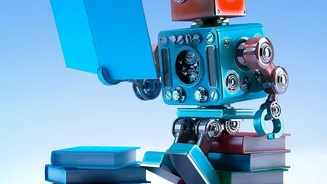
While it's not yet definitively proven that artificial intelligence was used to create all the disputed works, the suspicion hangs heavy over the case. Tamil Nadu's School Education Minister dubbed it potentially 'India's first AI scam'. The court observed that AI-generated and plagiarised works would fall under the category of books with 'doubtful taste' according to the Tamil Nadu Public Libraries Rules, 1950, and should not be procured. The case highlights a modern challenge: AI makes it easy to produce superficially credible content quickly, which can bypass traditional quality checks. This scandal reveals the vulnerability of public institutions to new forms of digital fraud.
The Heart of the Matter: Public Trust and Information
Beyond the financial implications, the court emphasized a more profound issue: the public's right to accurate information. The bench observed that people who visit public libraries are entitled to presume the books are authentic. Stocking them with bogus books by 'phantom authors' not only breaches statutory duty but also infringes on the fundamental right to receive quality information. This case, therefore, is not just about a procurement scam; it's about safeguarding the integrity of public knowledge and trust in our shared institutions.
What Happens Next?
The DVAC's investigation is now underway. Investigators will probe the role of public officials, the publisher Agal Vilakku Publications, and potentially others. Librarians across the state have been instructed to identify and withdraw all suspect books from circulation. As the inquiry proceeds, it is expected to lead to disciplinary action, and potentially criminal charges, against those found responsible. The case is set to become a critical benchmark for how India's legal and administrative systems handle the challenges posed by AI, copyright, and public procurement in the digital age.