





The Engine: A Different Set of Muscles
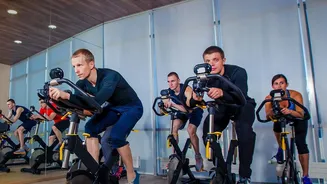
At first glance, both cycling and skating appear to be lower-body dominant. While true, the specific muscles they target vary significantly. Cycling is famously quad-heavy, with the large muscles at the front of your thighs doing most of the work pushing
the pedals down. The hamstrings and glutes assist in the upstroke, especially if you use clipless pedals, but the primary force comes from the quads. Inline skating, however, provides a more balanced lower-body and core workout. The side-to-side push-off motion heavily engages the gluteus medius (the side of your hips) and the inner and outer thigh muscles. Furthermore, skating constantly demands core engagement to maintain balance, strengthening your abs and lower back in a way that sitting on a bike saddle does not.
The Resistance: Mechanical vs. Body-Powered
Resistance is what makes a workout challenging, and this is a core difference between the two activities. In cycling, resistance is highly controllable. You can shift gears to make pedaling harder on a flat road or use gravity by tackling a steep hill. This allows for structured workouts with predictable power output. Wind resistance is also a major factor, especially at higher speeds. Skating resistance is more nuanced. It comes from the friction of the wheels on the pavement and the constant need to push off to overcome inertia. There are no gears to shift; to increase intensity, you must push harder, faster, or skate uphill. This makes the workout intensity directly proportional to your effort and technique in every single stroke.
Technique: The Skill That Shapes the Sweat
While proper form is important in any exercise, technique plays a much larger role in the effectiveness of a skating workout. Cycling is a relatively simple motion to learn. Once you have the basics of pedaling and balance, you can achieve a solid aerobic workout. Skating is different. It requires a significant level of balance, coordination, and agility. An inefficient skater with poor form will expend a lot of energy without achieving a good glide, resulting in a less effective workout. A skilled skater, however, who masters the deep knee bend and powerful, fluid push-off, can turn the activity into a high-intensity session that rivals running or interval cycling for aerobic benefit. This skill component means that as you get better at skating, your workouts can become progressively more challenging.
Caloric Burn and Impact: The Final Tally
Both activities are excellent for burning calories and are considered low-impact, making them easier on the joints than running. When comparing calorie burn, intensity is the deciding factor. At a moderate, steady pace, cycling and skating burn a similar number of calories per hour. However, because skating engages more muscle groups simultaneously—including the core and upper body for balance—it has a slightly higher potential for caloric expenditure at a similar perceived effort. Studies have shown that intense interval skating can burn over 450 calories in 30 minutes. Ultimately, the activity you can perform with greater intensity and consistency will yield the best results for weight management.