






The End of a Monumental Era
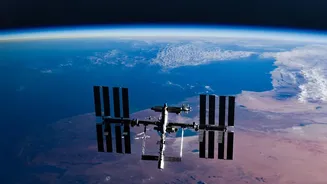
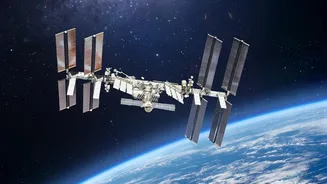
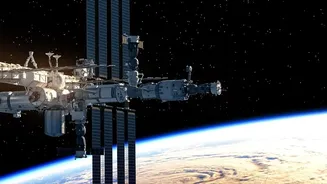
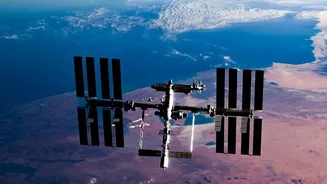
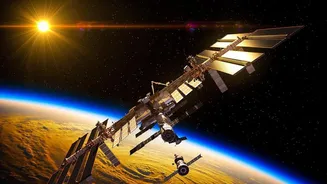
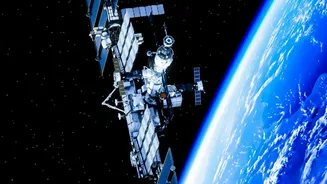
The International Space Station stands as one of humanity's greatest engineering and diplomatic achievements. Since 2000, it has hosted astronauts from numerous countries and served as a unique laboratory for thousands of experiments. Research in its
microgravity environment has yielded breakthroughs in medicine, materials science, and our understanding of human physiology. However, the aging station is nearing the end of its operational life. NASA and its partners have committed to operating it through 2030, after which it will be carefully deorbited to a remote area of the Pacific Ocean. This impending retirement creates a critical challenge: without a successor, the world risks losing access to a dedicated microgravity research platform, potentially stalling decades of scientific progress.
NASA's Pivot to a Commercial Model
Rather than building a new government-owned station, NASA is championing a different approach. Through its Commercial Low Earth Orbit Destinations (CLD) program, the agency is actively funding and supporting private companies to build their own space stations. The plan is for NASA to transition from being an owner-operator to one of many customers, buying services and research time from these commercial platforms. This strategy mirrors the success of its commercial cargo and crew programs, which revitalized access to the ISS by partnering with companies like SpaceX. The goal is to foster a robust, self-sustaining economy in low Earth orbit, freeing up NASA to focus its resources on deep space exploration, including missions to the Moon and Mars under the Artemis program.
The New Players in Orbit
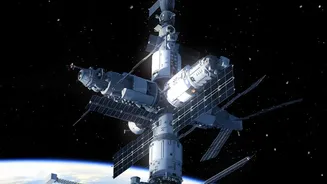
A handful of ambitious companies are racing to become the first commercial landlords in space. Axiom Space is building modules that will initially attach to the ISS before detaching to become a free-flying station. The company has already flown several private astronaut missions to the ISS, giving it valuable operational experience. Another major contender is the Starlab station, a joint venture between US-based Voyager Space and European aerospace giant Airbus, which plans to launch its primary module on a single flight before 2030. Meanwhile, Blue Origin and Sierra Space are developing Orbital Reef, envisioned as a "mixed-use business park" in space, designed to host research, manufacturing, and even tourism. These projects, along with others like Vast's Haven-1, are all targeting launch dates in the late 2020s to ensure there is no gap in research capability after the ISS is decommissioned.
Unlocking a New Wave of Research
The primary benefit of having multiple commercial stations is a dramatic increase in access and capability for microgravity research. The ISS, as a single, multi-purpose facility, has always had a research bottleneck. Commercial stations promise to change that by offering more frequent access and specialized facilities tailored to specific industries. Fields like biotechnology and pharmaceuticals stand to gain enormously. In microgravity, scientists can grow more perfect protein crystals for drug development and study cellular processes related to cancer and aging without the masking effects of gravity. Similarly, material scientists can create novel alloys and semiconductor crystals with unparalleled purity and structure. These new platforms will function less like a single national lab and more like a competitive ecosystem of orbiting research parks, accelerating the journey from discovery to market-ready products.
The Challenges Ahead
The transition to a fully commercialized LEO is not without its hurdles. For one, the business case for these expensive ventures is still developing. There has been some debate within NASA itself about whether a purely commercial market is ready, with policy proposals shifting before ultimately reaffirming the free-flyer model. Securing sufficient funding and demonstrating a clear path to profitability are major challenges for these companies. Furthermore, ensuring a smooth and continuous handover from the ISS to these new platforms is a complex logistical task. Despite the recent progress and clear timelines, any significant delays could create the very research gap NASA is trying to prevent. The success of this new era depends on a delicate balance of private innovation, sustained government support, and market demand from a diverse range of customers beyond just space agencies.