
The Philosophy of the Feast
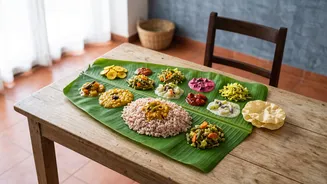
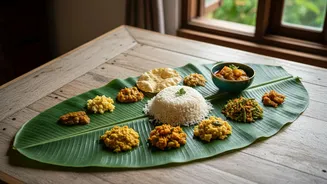
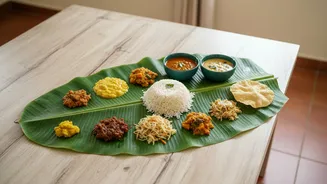
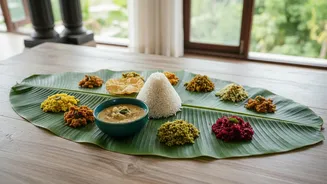
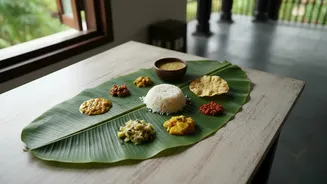
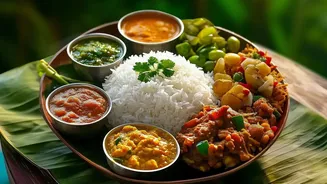
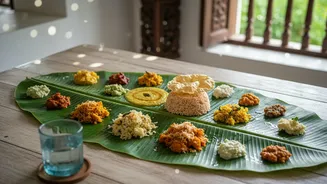
An Onam Sadya is more than just a collection of dishes; it's a carefully choreographed experience designed to balance a spectrum of flavours: sweet, sour, salty, spicy, and bitter. Served on a banana leaf with the narrow tip pointing left, each item has
a designated spot, creating a culinary map for the diner. The logic is to start with milder flavours and progress to more complex ones, allowing for a harmonious dining journey. While a full sadya can feature over 26 dishes, you don't need to make them all. Focusing on a representative from each category will still give you an authentic and manageable experience.
The Foundation: Rice, Chips, and Pickles
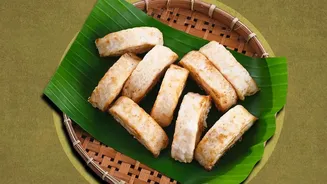
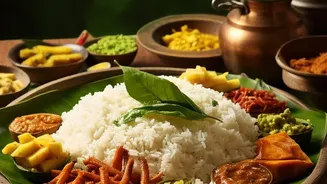
The meal begins with the placement of accompaniments on the top half of the leaf. This includes crispy banana chips (Kaaya Varuthathu), sweet jaggery-coated banana chips (Sharkara Varatti), and the essential Pappadam. A pinch of salt is traditionally placed at the top left corner. Next come the pickles, small but mighty flavour bombs that cut through the richness of the meal. The most important are Inji Puli, a sweet and tangy ginger-tamarind chutney, and a sharp mango pickle (Kadumanga Achar).
The Main Curries: A Study in Contrast
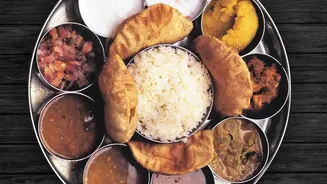
The heart of the sadya lies in its curries, served over a mound of fluffy red Matta rice. You start with Parippu, a simple moong dal curry, drizzled with ghee. Next comes Sambar, a robust and tangy lentil stew packed with vegetables. This is followed by lighter, coconut-milk based curries. Avial is a thick mixture of various vegetables, coconut, and yoghurt, offering a creamy texture. Olan is a milder, delicate stew of ash gourd and black-eyed peas in coconut milk, designed to cleanse the palate. Kalan is a thicker, sour curry made with yoghurt and typically features yam or raw banana. Choosing one or two from this group provides the necessary balance.
The Supporting Sides: Pachadi, Kichadi, and Thoran
To add more layers of flavour and texture, several side dishes are crucial. Pachadi and Kichadi are yoghurt-based preparations. Pachadi is generally sweeter, often made with pineapple or beetroot, while Kichadi is its spicier cousin, perhaps featuring cucumber or bitter gourd. Thoran is a dry stir-fried vegetable dish, usually made with finely chopped cabbage or beans mixed with grated coconut, providing a pleasant crunch and balancing the liquid curries. Another popular dry side is Mezhukkupuratti, a stir-fry where vegetables like raw banana or yam are coated in spices.
The Grand Finale: Payasam and a Savoury Farewell
No Sadya is complete without the dessert course, Payasam. Traditionally, at least two types are served. A popular choice is Ada Pradhaman, made with rice flakes, jaggery, and coconut milk, offering a deep, caramel-like sweetness. Another is Palada Payasam, a creamy, milk-based pudding with delicate rice flakes. The payasam is often enjoyed by mashing a small, ripe banana into it. Interestingly, after the sweetness of the dessert, the meal often concludes with a final serving of tangy Rasam or cooling buttermilk (Moru) with rice to reset the palate and aid digestion.