






Not Your Average Ice Cream
Before we dive into what makes the Amritsari version so special, let’s get one thing straight: kulfi is not ice cream. While both are frozen desserts, their soul is entirely different. Ice cream is light and airy, whipped with air as it churns. Kulfi,
on the other hand, is dense, rich, and creamy. It’s made by slowly simmering milk for hours, often with sugar, until it reduces and thickens, caramelising the milk sugars and developing a uniquely complex flavour. This thickened milk, or rabri, is then poured into moulds (traditionally conical 'kulfis') and slow-frozen without being churned. The result is a solid, decadent dessert that melts slowly, coating your palate with flavour instead of vanishing in a cold puff of air.
The Amritsari Difference
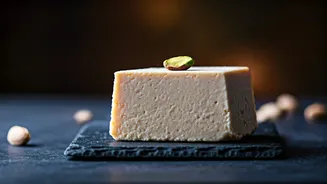
So, what sets Amritsari kulfi apart from its other regional cousins? The secret lies in its texture and its preparation. True Amritsari kulfi is defined by its slightly granular, almost 'khurchan'-like consistency. This isn't a flaw; it's a feature. It comes from the expert handling of the milk as it reduces, allowing tiny, flavourful solids to form. The base is pure, full-fat milk, patiently stirred until it's a shadow of its former volume but a giant in flavour. The flavour profile is classic and robust: a fragrant blend of cardamom and saffron, studded with chopped pistachios and almonds. It’s often served sliced into discs from a larger frozen block, or more iconically, layered with chewy, rose-scented falooda noodles. This combination of textures—the creamy kulfi, the chewy noodles, and the crunchy nuts—is what makes it a masterpiece.
A Legacy of Mughal Kitchens
Kulfi has a rich history that stretches back to the Mughal Empire in the 16th century. It’s believed that the dessert was developed in the imperial kitchens, where cooks used ice brought down from the Himalayas to freeze a mixture of condensed milk, pistachios, and saffron in metal cones. This 'qulfi' (from the Persian word for a covered cup) was a royal treat, a luxurious way to cool down in the heat of the subcontinent. Over centuries, this royal dessert trickled down to the masses, evolving as it spread. Regional variations blossomed, with cities like Amritsar perfecting their own distinct style, turning a courtly indulgence into a beloved street-side staple that connects modern India to its regal past with every delicious, frozen bite.
Where to Find the Real Deal in Delhi
While countless vendors sell kulfi across Delhi, finding one that honours the authentic Amritsari tradition takes a little searching. Your best bet is to explore areas with a strong culinary legacy. Head to the bustling lanes of Old Delhi, where generations-old establishments still practice the slow-cooking method. Places like Kuremal Mohan Lal Kulfi Wale are legendary for their innovative fruit kulfis, but their classic rabri and pista kulfis are a true taste of tradition. In South Delhi, look for established sweet shops or chains like Roshan di Kulfi in Karol Bagh, which have built their reputation on serving this classic dessert for decades. When you see kulfi being sliced from a large cylindrical block and served with falooda, you know you’re on the right track. Ask for the 'Pista Kulfi' or 'Kesar Pista Falooda Kulfi' for the most authentic experience.