

The Enigma of Earth's Twin
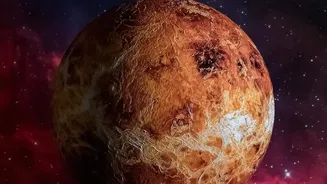
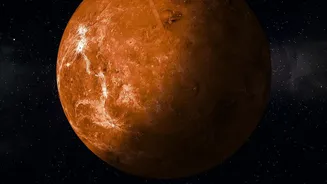
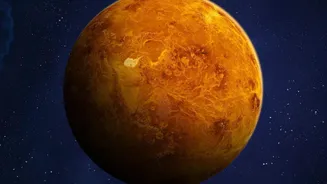
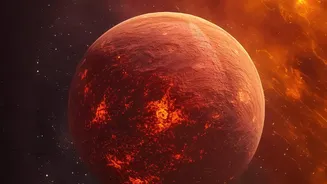
Venus is a planet of contradictions. It's our closest planetary neighbour and similar in size to Earth, yet its path of evolution has been wildly different. Its surface is a scorching landscape with temperatures hot enough to melt lead, and the atmospheric
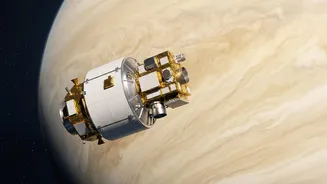
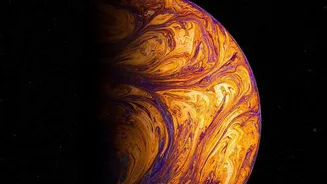
pressure is over 90 times that of Earth's. The entire planet is permanently hidden by a dense layer of clouds made primarily of sulphuric acid. Scientists are fascinated by why two planets that started so similarly could end up in such different states. Understanding Venus's runaway greenhouse effect could offer crucial insights into planetary climate change, including for our own world. This is the mystery that ISRO’s first Venus Orbiter Mission, Shukrayaan, aims to investigate.
Shukrayaan: India's Ambitious Voyage
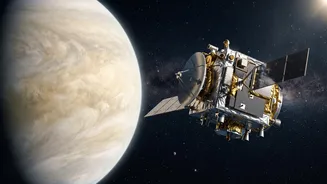
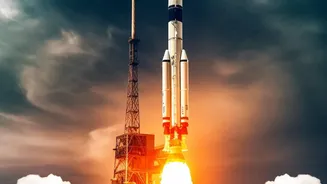
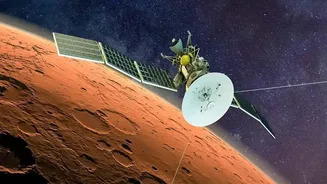
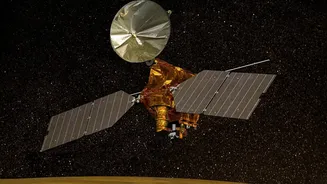
Scheduled for launch in March 2028 aboard a powerful LVM-3 rocket, Shukrayaan represents a major leap for India's interplanetary ambitions following the success of the Mars Orbiter Mission (Mangalyaan). The orbiter will carry a payload of approximately 100 kg, comprising around 19 scientific instruments from India and international partners, including Sweden, Russia, and Germany. The mission has several core objectives: mapping the surface and subsurface geology, studying the composition and dynamics of the atmosphere, and analysing the interaction between the Venusian atmosphere and the solar wind. One of the most critical goals is to understand the chemical processes happening within and below those impenetrable clouds.
A Toolkit for a Toxic Atmosphere
To probe the chemical reactions under the clouds, Shukrayaan will be equipped with highly specialised sensors. A key instrument is the Venus Infrared Atmospheric Gases Linker (VIRAL), a collaborative payload with Russia, which will use spectroscopy to identify the chemical makeup of the atmosphere. Another important sensor is the Solar Occultation Photometry (SPAV), which will analyse how sunlight filters through the atmosphere to map the vertical distribution of different gases and aerosols. A mass spectrometer will also be on board to directly sample and analyse the composition of the upper atmosphere, providing precise data on the molecules present. Together, these instruments will build a comprehensive, three-dimensional picture of the planet's atmospheric chemistry.
Piercing the Sulphuric Veil
The main challenge on Venus is its thick cloud cover. To see through it, Shukrayaan will use a high-resolution Synthetic Aperture Radar (SAR). This instrument can penetrate the clouds to map the planet's surface, searching for signs of active volcanism like lava flows. This is crucial because volcanic eruptions release gases like sulfur dioxide into the atmosphere, which is a key ingredient in the formation of the sulphuric acid clouds. By linking surface activity with atmospheric data from other sensors, scientists can investigate the chemical cycles that sustain the clouds. Other instruments like the Venus Thermal Camera (VTC) and Venus Cloud Monitoring Camera (VCMC) will study cloud dynamics, lightning, and thermal emissions, adding more layers to the data.
Searching for Answers, and Life?
While the surface of Venus is hostile, some scientists have speculated that the upper atmosphere, around 50-60 km high where temperatures are more Earth-like, could potentially harbour microbial life. The controversial detection of phosphine gas a few years ago—a gas associated with biological processes on Earth—has heightened this interest. Shukrayaan's atmospheric sensors, particularly VIRAL, are designed to search for such trace gases and other potential biosignatures. By studying the complex chemical reactions, the mission will help determine whether these gases have a geological or a biological origin, potentially answering one of the most profound questions in planetary science.