








Rethinking Your Route to the Runway
The common wisdom of choosing an airport is almost always based on distance. Whichever airport Google Maps says is a 45-minute drive away seems like the obvious choice over one that is 90 minutes away. But as any frequent traveller in India will tell
you, the map doesn't show the whole picture. The true cost of reaching your flight is a combination of time, money, and stress. This is what we call 'total friction' — a collection of obstacles and irritations that can make the start of your trip exhausting before you even reach the check-in counter. By shifting your focus from minimising kilometres to minimising this friction, you can fundamentally improve your travel experience. It requires a more thoughtful approach, one that weighs multiple factors to find the genuinely 'best' airport for your specific journey.
The Journey Before the Journey
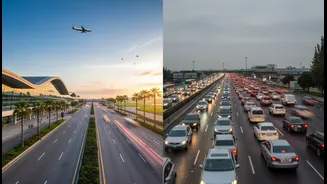
The drive to the airport is the first, and often most unpredictable, part of your trip. An airport that is 30 kilometres away through a city's congested core during peak hours can take far longer, and be infinitely more stressful, than an airport 70 kilometres away via a smooth expressway. Consider the different transport options available. For Delhi's Indira Gandhi International Airport (DEL), the Airport Express Metro can be a predictable, traffic-beating option, whereas a cab might get stuck for hours. Conversely, reaching Bengaluru's Kempegowda International Airport (BLR), located far from the city centre, often involves a long taxi ride with variable fares and potential traffic jams. Calculate the real cost: not just the fuel or cab fare, but also the 'buffer time' you need to add for potential delays. Sometimes, the longer route is the faster, cheaper, and calmer one.
The Terminal Trek
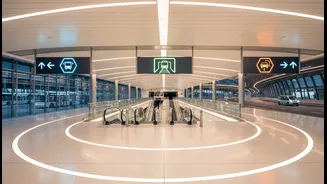
Once you're inside, the friction continues. The physical size and layout of an airport play a huge role in your stress levels. A sprawling terminal like Delhi's T3, while impressive, can mean a long walk from security to a distant gate. Mumbai's Chhatrapati Shivaji Maharaj International Airport (BOM), known for its art-filled T2, can also be a maze to first-timers. In contrast, a well-designed single-terminal airport like Hyderabad's Rajiv Gandhi International Airport (HYD) is often praised for its efficiency and ease of navigation, with separate levels for arrivals and departures simplifying passenger flow. The ease of finding your way, the time spent walking, and the general sense of calm or chaos inside the building are all part of the friction equation. Technology like DigiYatra is helping to reduce waits at security, but the physical journey to the gate remains a key factor.
The Hidden Costs of Convenience
The friction isn't just about time and stress; it's also about money. Parking fees, taxi surcharges, and even the price of a bottle of water can vary significantly between airports. An airport might seem convenient until you're faced with exorbitant long-term parking rates. The cost of app-based rides can surge based on demand, which is almost always high at airports. Furthermore, the efficiency of check-in and security processes can have a financial impact. A chaotic, slow-moving security line might cause you to miss a flight, leading to expensive rebooking fees. These small-but-significant costs are often overlooked when we focus only on the airfare or the distance on a map. Factoring in these potential expenses gives you a more realistic picture of the total cost of choosing one airport over another.
Decoding the Crowds
Finally, consider the airport's personality and peak hours. Some airports are notorious for long immigration queues at specific times, especially when multiple international flights land overnight. Peak departure times for domestic flights can lead to packed security halls and a frantic atmosphere. For example, reports suggest immigration queues at Delhi can be very long during peak arrival times, while Mumbai's reliance on a single runway can increase the risk of delays for connecting flights. Smaller airports or those with more efficient processing, like Hyderabad or Chennai, might offer a smoother experience. Understanding an airport's rhythm can help you choose an entry or departure point that is less likely to be operating at peak chaos during your travel time. A quick search for recent traveller reviews can provide invaluable insight into current wait times and congestion levels.