





The Vitamin C Champion: Papaya
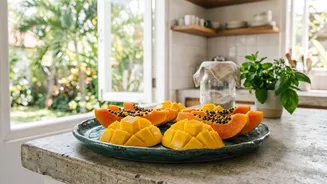
When it comes to boosting your immunity, papaya is a formidable contender. It is exceptionally rich in Vitamin C, an essential antioxidant that helps protect cells from damage and supports a robust immune system. A single 100-gram serving of papaya can
provide over 60 mg of Vitamin C, which is more than half of the recommended daily intake for an adult. In fact, some studies show that papaya contains significantly more Vitamin C than a mango of the same weight. This makes papaya an excellent choice during times when you feel a cold coming on or simply want to keep your body's defences strong. This high Vitamin C content also plays a crucial role in collagen synthesis, which is vital for healthy skin and wound healing.
The Vitamin A Powerhouse: Mango
While papaya wins on Vitamin C, the mango reigns supreme in the Vitamin A department. The beautiful golden-orange flesh of a ripe mango is a clear indicator of its high beta-carotene content, which our bodies convert into Vitamin A. This vitamin is critical for maintaining healthy vision, especially in low light, and plays a key role in skin health and immune function. A 100-gram portion of mango provides a significant amount of your daily Vitamin A needs, often more than double what you would get from papaya. So, if your focus is on eye health or achieving a natural glow, reaching for a slice of mango is a smart move.
Folate, Fibre, and Digestion
Beyond the headline vitamins, both fruits offer a wealth of other nutrients. Mango is a standout source of folate (Vitamin B9), a crucial nutrient for cell growth and particularly important during pregnancy. On the other hand, papaya contains a unique enzyme called papain. This enzyme is famous for its ability to aid in the digestion of proteins, which can help soothe the stomach and reduce bloating after a heavy meal. Both fruits are also good sources of dietary fibre, which is essential for a healthy digestive system, though papaya is often noted for having slightly less sugar and fewer calories, making it a lighter option.
A Look at Other Essential Nutrients
The nutritional duel doesn't end there. Mangoes tend to offer more Vitamin E, another antioxidant that helps protect skin, and Vitamin B6. Papayas often provide a bit more potassium, an important mineral for regulating blood pressure, and sometimes more riboflavin (Vitamin B2). Both fruits contain a variety of powerful plant compounds and antioxidants that fight inflammation and protect the body from oxidative stress. These compounds contribute to the overall health benefits of the fruits, supporting everything from heart health to cellular protection.
The Verdict: Which Fruit Is for You?
So, which fruit should you choose? The truth is, there's no single winner. The 'better' fruit depends entirely on your personal health goals. If you're looking to maximise your Vitamin C intake for a powerful immune boost or need some help with digestion, papaya is your go-to fruit. Its lower calorie and sugar content also make it a great choice for those managing their weight. If you're focused on improving your eye health, nourishing your skin with Vitamin A, or need a good dose of folate, then the mango is your champion. The slightly higher calorie and sugar content in mango also makes it a great source of quick energy.