


A Pattern of Proximity
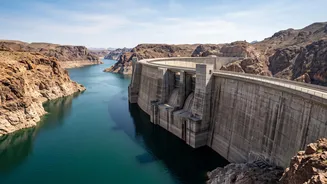
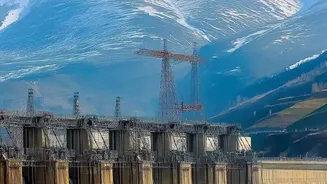
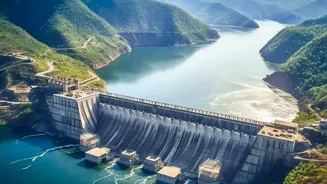
For years, analysts have documented Iran’s extensive network of dams and water projects, with some questioning the logic behind their placement in arid regions. More recently, a new layer of analysis has emerged, spurred by airstrikes that have occurred
during regional conflicts. Researchers noticed that several of these strikes, which targeted suspected military sites, happened in the vicinity of major dams. This geographic correlation has led experts to question whether the placement is a coincidence or a calculated strategy, with some suggesting that the dams could provide a steady supply of water and electricity to sprawling, and often underground, military complexes. While no definitive evidence has publicly proven a direct link, the pattern is strong enough to warrant serious concern among military and environmental experts.
The Cocktail of Catastrophic Risks
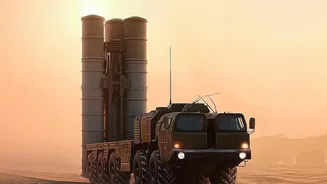
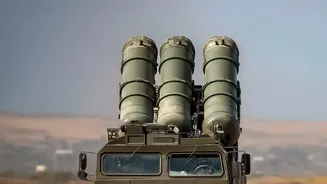
The primary concern is the immense risk posed to civilian populations. Storing volatile missile propellants and explosives near a large body of water creates a trifecta of potential disasters. Firstly, there is the risk of chemical contamination. Many ballistic missiles use hypergolic propellants, which are highly toxic and corrosive chemicals that ignite on contact with each other. A leak or spill could poison a reservoir that supplies drinking water and irrigation to millions of people downstream. Secondly, the risk of a massive explosion cannot be discounted. An accidental detonation at a storage site or a misfire during a test launch could potentially damage the structural integrity of a nearby dam, leading to catastrophic flooding and a humanitarian crisis. Finally, these facilities are high-value military targets. In any armed conflict, they would likely be among the first sites to be attacked, placing the associated dams and civilian areas in the direct line of fire.
Strategic Logic vs. Civilian Safety
From a purely military perspective, the logic of placing these bases in remote, mountainous areas near dams is understandable. The terrain offers natural protection and concealment for sensitive operations, making it easier to build hardened, underground 'missile cities' that are difficult to target. A reliable, independent source of power and water from a nearby dam would be a significant logistical advantage, allowing these bases to operate off-grid and remain self-sufficient. However, this strategy appears to prioritize military defensibility over the safety of the country's own citizens. It places critical civilian infrastructure, which is protected under international law, in a precarious position by co-locating it with legitimate military targets. This 'dual-use' dilemma creates a grey area that could be exploited during a conflict, with devastating consequences for civilians.
The Official Response and The Debate
Iranian officials have strongly pushed back against the suggestion that their civilian dams are linked to military programs. Tehran has labeled the reports as baseless propaganda designed to create a pretext for attacking the nation's vital infrastructure. The Speaker of Iran's Parliament, Mohammed Bagher Ghalibaf, warned that applying this logic could set a dangerous precedent, suggesting that any dam or power plant near a US or Israeli base could also be considered 'dual-use'. Critics of the theory also point out that spatial proximity does not equal causality, arguing that both military bases and dams are often built in mountainous regions for entirely separate and logical reasons—one for defense and the other for topography. They warn that such speculation, particularly during a time of war, endangers civilian lives by blurring the lines around protected sites.