




Why Just Five Minutes Works
It may not seem like much, but research shows that even short bursts of meditation can make a real difference. Five minutes is enough to interrupt the body's stress response, often called 'fight or flight', and activate the parasympathetic nervous system,
which is responsible for rest and relaxation. When you intentionally slow your breathing, you send a signal to your brain that it is safe to relax. This can help lower your heart rate, reduce levels of the stress hormone cortisol, and improve the flow of oxygen to your brain, leading to greater clarity and focus. The key isn't duration, but consistency. A daily five-minute practice is often more beneficial than a longer session once a week.
Preparing for Your Practice
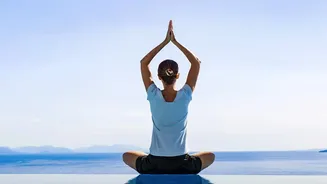
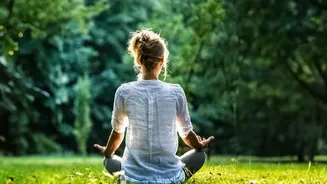
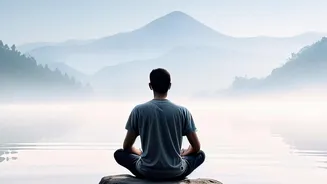
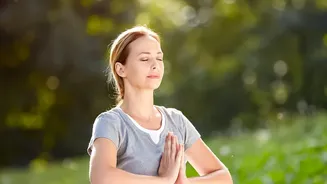
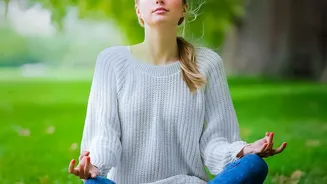
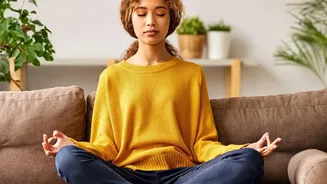
Getting started is simple and requires no special equipment. First, find a quiet place where you won't be interrupted for five minutes. You can sit comfortably in a chair with your feet flat on the floor or on a cushion on the ground. The most important thing is to keep your back straight to allow for full, easy breaths. Let your hands rest comfortably in your lap. You can close your eyes or soften your gaze by looking down at a spot a few feet in front of you. Before you begin the breathing exercise, take a moment to simply notice how you feel without judgment. Acknowledging your current state is the first step toward changing it.
Routine 1: Box Breathing for Focus
Box breathing, also called square breathing, is a simple and effective technique for calming your mind and sharpening your focus. It is used by everyone from athletes to military personnel to stay grounded under pressure. The four-part structure is easy to remember. To practice it: 1. Gently exhale all the air from your lungs. 2. Inhale slowly through your nose for a count of four. 3. Hold your breath for a count of four. 4. Exhale slowly through your mouth for a count of four. 5. Hold your breath again at the end of the exhale for a count of four. This completes one cycle. Repeat this for the duration of your five-minute session. Visualising a square as you breathe can help you maintain the rhythm.
Routine 2: The 4-7-8 Breath for Relaxation
Popularised by Dr. Andrew Weil, the 4-7-8 breathing technique is a natural tranquilliser for the nervous system. It is especially useful for reducing anxiety and helping you fall asleep. The longer exhale is key to its calming effects, as it slows the heart rate. Here’s how to do it: 1. Sit comfortably and place the tip of your tongue against the tissue just behind your top front teeth. Keep it there throughout the exercise. 2. Exhale completely through your mouth, making a gentle 'whoosh' sound. 3. Close your mouth and inhale quietly through your nose for a mental count of four. 4. Hold your breath for a count of seven. 5. Exhale completely through your mouth with another 'whoosh' sound for a count of eight. This is one full breath. Repeat the cycle three more times for a total of four breaths. If holding for seven seconds is difficult, you can shorten the counts, as long as you maintain the 4:7:8 ratio.
Routine 3: Diaphragmatic Breathing to Relieve Tension
Many of us tend to take shallow breaths from our chests, especially when stressed. Diaphragmatic breathing, or belly breathing, encourages a deeper, more efficient exchange of oxygen that can help release physical tension. To practice this, lie on your back or sit comfortably. Place one hand on your upper chest and the other on your belly, just above your navel. Breathe in slowly through your nose, focusing on expanding your belly like a balloon while keeping the hand on your chest as still as possible. Then, exhale slowly through pursed lips, feeling your belly fall as the 'balloon' deflates. Focusing on the physical sensation of your belly rising and falling helps ground you in the present moment and quiet mental chatter.