





When and Where to Watch
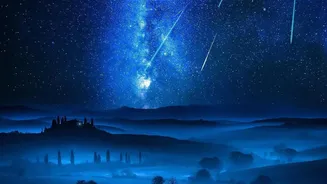
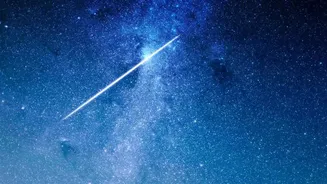
The Orionid meteor shower will be active from early October to early November, but the best time to watch is during its peak. In 2026, the peak is expected on the night of October 21-22. The shower is known for a broad maximum, so viewing can be good
for a few nights around this date as well. These meteors are visible in both the Northern and Southern Hemispheres after midnight. The radiant, or the point from which the meteors appear to originate, is in the constellation Orion, near the bright star Betelgeuse. However, you don't need to look directly at Orion; the meteors can appear anywhere in the night sky.
The Moonlight Problem in 2026
The main challenge for viewing the 2026 Orionids is a bright waxing gibbous Moon. On the peak night of October 21-22, the Moon will be about 80% illuminated, ahead of the full moon on October 26. This bright moonlight will wash out the sky for much of the night, making it difficult to see the fainter meteors. Under ideal, dark-sky conditions, the Orionids can produce about 15 to 20 meteors per hour, but the Moon's glare will significantly reduce this number. Moonlight acts like natural light pollution, reducing the contrast in the sky and hiding all but the brightest shooting stars.
A Window of Opportunity Before Dawn
Despite the bright Moon, there is still hope for a decent show. On the peak mornings, the waxing gibbous Moon will set a few hours before dawn. This creates a crucial window of true darkness, which is the absolute best time to watch. Stargazers who are willing to set an alarm for the pre-dawn hours on October 21 and 22 will be rewarded with the darkest skies and the best chance of spotting meteors. The most activity is typically seen between midnight and dawn anyway, as this is when our side of Earth is facing into the stream of meteoroid debris.
A Link to Halley's Comet
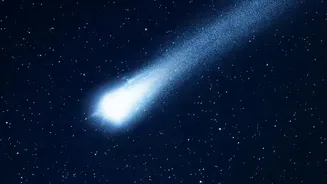
One of the most fascinating aspects of the Orionids is their origin. The meteors are tiny fragments of dust and ice shed by the most famous comet of all: 1P/Halley. This comet takes about 76 years to orbit the Sun and was last seen in our inner solar system in 1986. It won't return until 2061. Each October, when Earth crosses the comet's orbital path, we pass through this ancient trail of debris. The particles, many no bigger than a grain of sand, burn up at incredible speeds—about 66 kilometers per second—creating the fast, often bright streaks of light we call the Orionids. These meteors are known for their speed and can sometimes leave persistent, glowing trains in their wake.
Tips for the Best Viewing Experience
To make the most of the challenging conditions, your best strategy is to maximize darkness. First, get as far away from city lights as possible. Find a safe, open area with a wide view of the sky. Second, plan your viewing for the hours before dawn, after the Moon has set. Third, give your eyes at least 20-30 minutes to fully adapt to the dark; avoid looking at your phone during this time. You don't need a telescope or binoculars, as your naked eyes are best for scanning the whole sky. Finally, even if you watch while the moon is up, try to position yourself in the shadow of a building or hill to block its direct glare. Even a few bright meteors streaking across the sky can make the effort worthwhile.