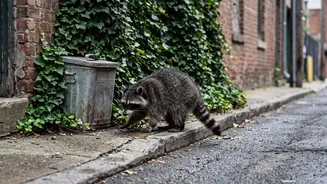





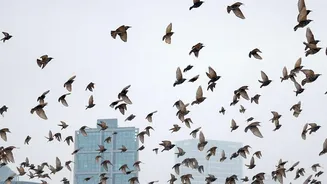

Seeing a raccoon dart across a street or a pigeon nesting on a ledge feels normal. But this is more than just animals finding food. It’s evolution in action, as wildlife rapidly adapts to the unique pressures of our concrete jungles.
The New Rules of Survival
Cities are not biological
deserts; they are a new and challenging ecosystem. Instead of natural predators, animals face traffic and people. Food isn't always foraged from trees, but from bins and human handouts. This environment creates a powerful form of natural selection. Animals that are bolder, cleverer, and more flexible are more likely to survive and reproduce. As a result, urban animals are not just behaving differently—in some cases, they are becoming genetically distinct from their rural relatives, sometimes in just a few generations.
Smarter, Bolder Problem-Solvers
The challenges of city life seem to be making some animals more intelligent. Studies have repeatedly found that urban animals, from birds to raccoons, are better at problem-solving than their country counterparts. When presented with puzzle boxes containing food, urban raccoons persistently work at them until they succeed, while rural raccoons often give up. This isn't just about learning; it's about a behavioural shift towards boldness and curiosity. Animals that are less fearful of new objects and human proximity are better positioned to exploit the novel resources cities offer, like complex 'animal-proof' bins which inadvertently act as a training program for the cleverest individuals.
The Shifting Songs of the City
If you've ever struggled to hear a friend at a loud party, you can understand the problem facing city birds. The constant, low-frequency roar of traffic drowns out their songs, which are crucial for attracting mates and defending territory. In response, many species, from European blackbirds to great tits and sparrows, have adapted by changing their tune. They often sing at a higher pitch to cut through the noise. Their songs can also be louder, faster, and shorter. Remarkably, this isn't always a slow genetic change. Some birds learn these new 'urban dialects' from their parents, a form of cultural evolution, while others can adjust their pitch in real-time in response to noise levels.
A New Urban Diet and Body
Adaptation is also happening from the inside out. Some species are evolving physically to match their new urban lifestyle. The crested anole lizard in Puerto Rico, for instance, has developed larger toe pads with more sticky scales to better grip smooth, man-made surfaces like painted walls and glass. The diet of urban animals is also driving change. White-footed mice in New York City have shown genetic shifts related to processing fatty foods, likely a result of dining on discarded human snacks. Similarly, some urban house sparrows have developed shorter, stronger beaks better suited to the processed grains and food scraps they find on city streets.
Living by Night
For many animals, the simplest way to adapt to a city full of humans is to avoid them. This has led to a significant behavioural shift towards nocturnal life. Species like coyotes and bobcats, which might be more active during the day in rural areas, often become primarily active at night in cities. This allows them to move through the urban landscape, hunt for food like rabbits and rodents, and navigate human infrastructure with a lower risk of stressful encounters. This change in sleeping patterns is a widespread strategy, observed across many urban mammal species as they carve out a time slot in the 24-hour city cycle that is safer for them.